

SPACE & LIGHT · CALM SPACES
Calm Home Ideas: Creating Quieter, Less Visually Busy Spaces
A calmer-feeling home begins with practical choices: reduce unwanted noise, make room for everyday activities and choose lighting that works for the people living there.
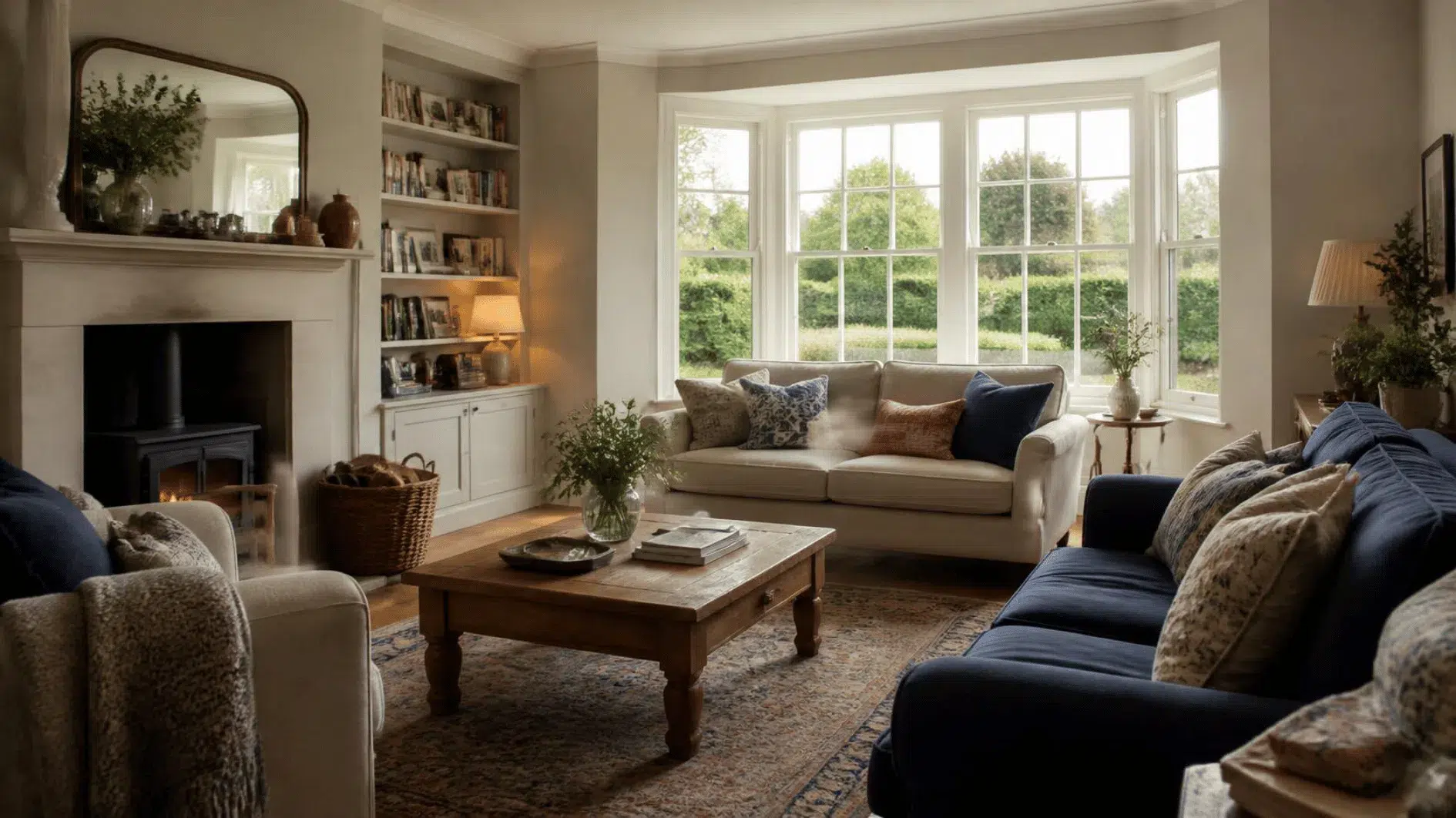
Calm home ideas are most useful when they solve everyday problems. A narrow walkway, a noisy appliance, an uncomfortable light or a crowded tabletop can make a room more difficult to use. You do not have to remove everything you own or redesign the entire house to improve those conditions.
This guide explains how room layout, visual busyness, household sound, task lighting and shared routines can affect the experience of a space. Each suggestion begins with practical needs and gives room for personal preference, accessibility and the realities of UK homes and rented flats.
For comfort and layering, see cosy home ideas. For reducing possessions, use how to declutter your home. Here the aim is an environment that feels less demanding while remaining functional and personal.
What Makes a Home Feel Calm?
A calm home is not one particular decorating style. It is a space in which the everyday environment works for the people using it: furniture is easy to move around, light suits the task, distracting sounds are managed where practical, and commonly used objects have sensible places.
The result need not be quiet all the time. Families, shared flats and active households naturally involve conversation, movement and possessions. The useful question is which parts of the environment cause unnecessary friction and what small changes might help.
A calm room should remain personal, functional and accessible. The suggestions here are interior and household-planning ideas, not methods for treating anxiety or other health conditions.
Calm, Cosy and Minimalist Homes Are Not the Same
Cosiness often concerns warmth, comfort, layering and a welcoming atmosphere. Minimalism may concern the amount of furniture or visual decoration. A calmer environment concerns the level of distraction, practical ease and control over the surroundings.
A room with books, patterned cushions and family photographs can still function calmly when the arrangement suits its occupants. Our cosy home ideas guide focuses on comfort and atmosphere, while minimalist home ideas focus on simplifying possessions.
This guide concentrates on visual busyness, unwanted noise, the arrangement of objects and making spaces easier to use without requiring a particular aesthetic.
Start With One Room and One Problem
Instead of redesigning an entire home, identify one small difficulty. Perhaps the living-room walkway is narrow, the desk reflects glare, or hallway objects have no convenient place to store them.
Notice when the problem happens and who is affected. The aim is to improve a real use case, not to create a photograph-ready interior.
- Choose one room or frequently used area.
- Identify a specific difficulty, such as noise, glare or obstructed access.
- Check whether an existing item can be moved, reused or maintained.
- Make one reversible change where possible.
- Use the space normally before deciding whether more change is worthwhile.
For renters and shared households, reversible adjustments are often easier to agree and maintain than permanent work.
Put Everyday Function Before Decorative Rules
A calm-feeling room still needs sufficient seating, safe movement, task lighting, and accessible storage. Avoid removing useful furniture just to leave more empty space.
Observe where people naturally sit, charge devices, put down bags or prepare drinks. Those patterns are clues about where surfaces, lighting and storage are needed.
If the home works smoothly, the decor can remain individual and expressive. Reducing friction is more valuable than trying to reproduce a sparse showroom.
Reduce Visual Busyness Without Removing Personality
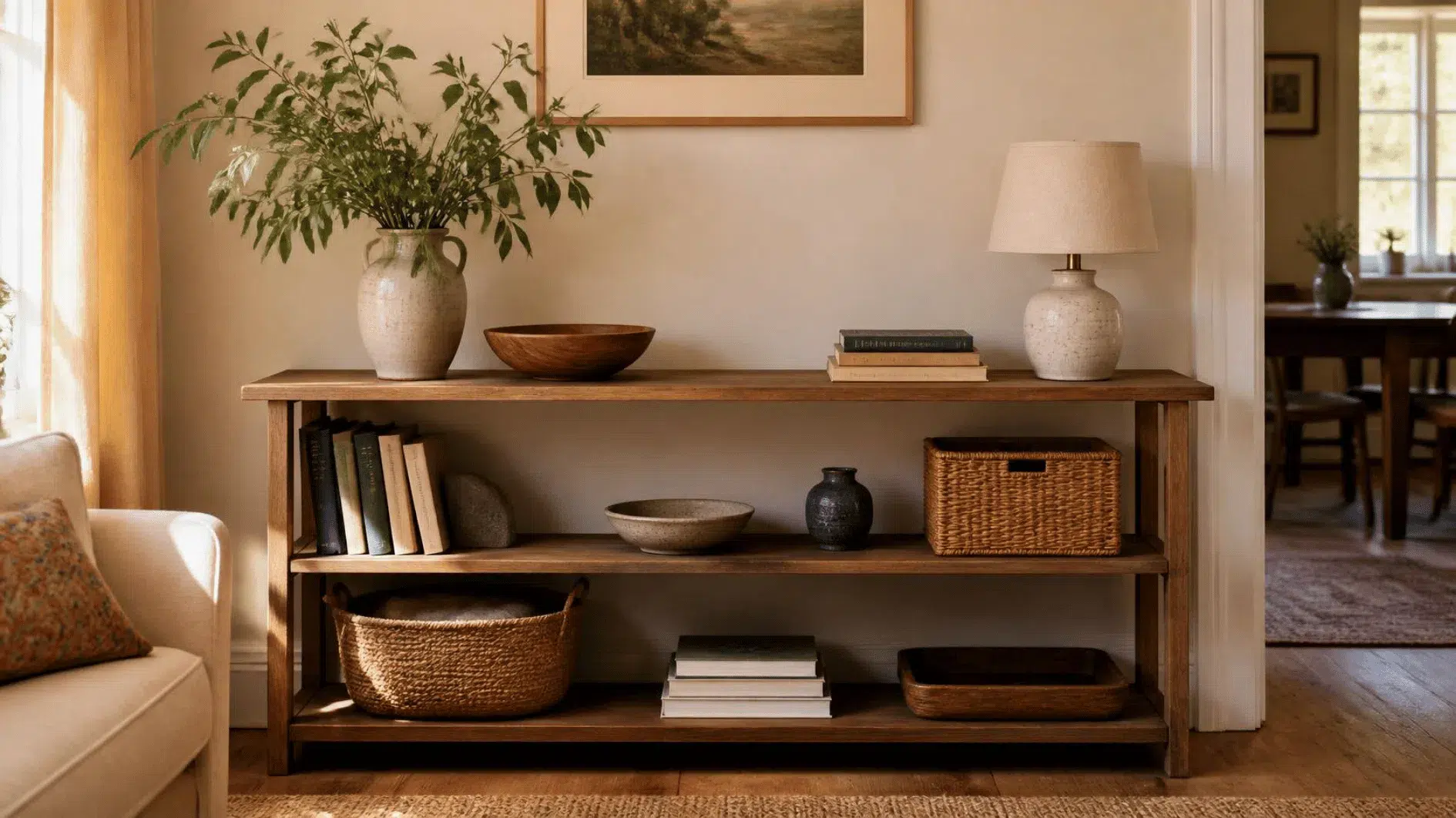
Visual busyness can come from objects spread across many surfaces, exposed cords, competing patterns or frequently used items left in awkward positions. None of these is inherently wrong; the issue is whether the arrangement feels distracting or makes the room harder to use.
Try collecting small essentials in an accessible tray, grouping books by where they are read or leaving part of a frequently used worktop clear. A few purposeful changes can make objects easier to find without asking you to own less.
Our Visual Clutter guide distinguishes changing an arrangement from decluttering and offers examples for busy rooms.
Give the Eye Somewhere Comfortable to Rest
A room with several bold focal points, busy shelves and patterned fabrics can make it difficult to notice its main function. Consider which features you want to stand out and which can remain simpler.
A reasonably clear wall, a plain section of worktop or a well-placed chair can create a quieter visual area. This does not require neutralising every colour or removing photographs and keepsakes.
Look at the room from its entrance and from the places where people usually sit. The view from daily use often reveals more than a styled corner.
Group Everyday Objects Rather Than Hiding Everything
Open storage is useful when objects need frequent access. A reading table might hold a lamp, a current book, and glasses, while charging equipment can have a designated location that remains well-ventilated.
Grouping related objects can make a surface easier to scan, but avoid overfilling trays or containers. Items should be easy to put back without extra effort.
If the main challenge is excess possessions rather than their arrangement, use our how to declutter your home guide or home organisation ideas instead.
Arrange Furniture for Clear, Comfortable Movement
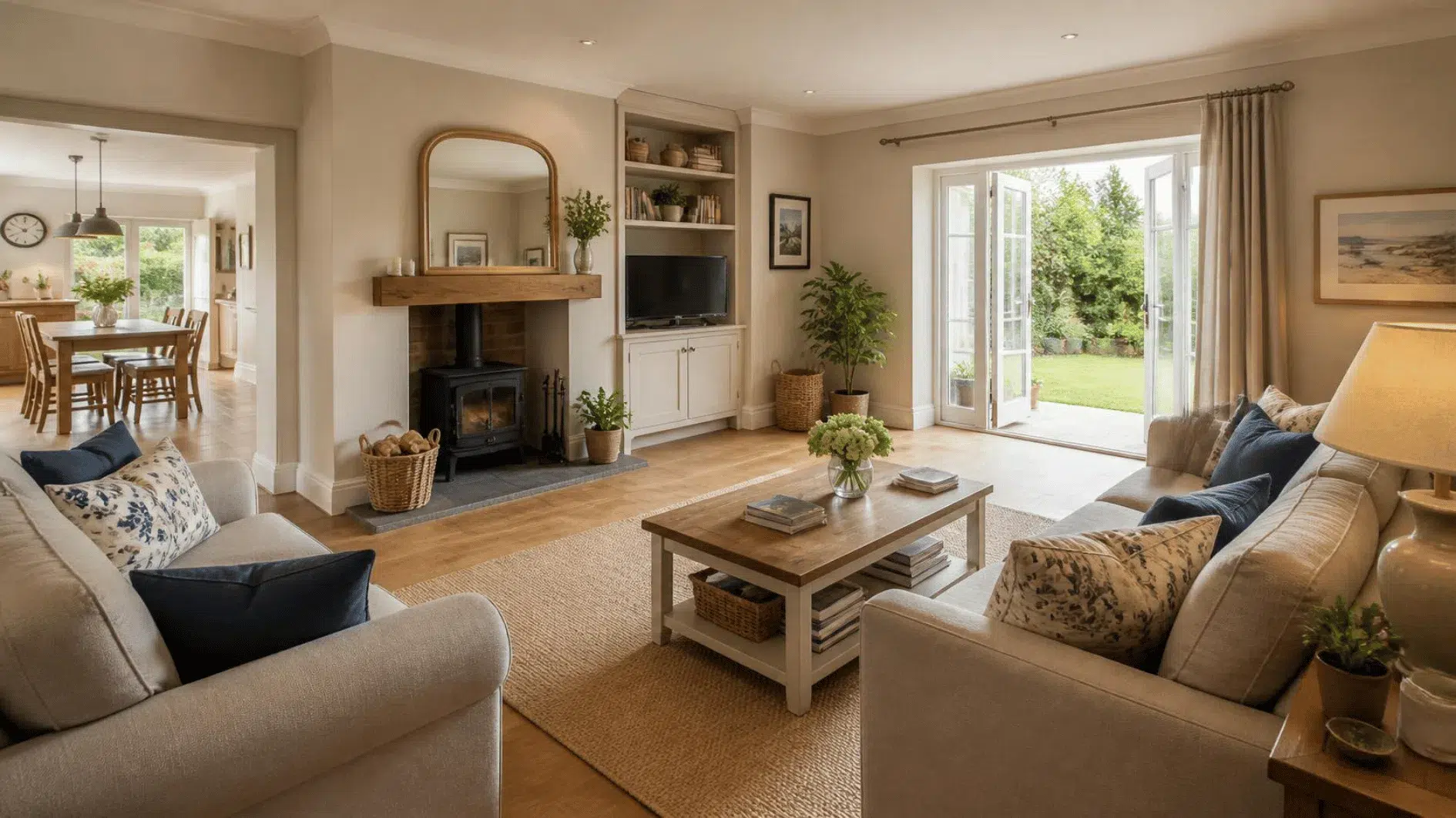
Furniture placement affects whether a room feels easy to navigate. Check door swings, circulation around tables and access to seating, windows and cupboards.
A narrow route between large items can make ordinary activities inconvenient. Sometimes turning a chair or moving a side table improves the space without new furniture.
Keep accessibility and emergency exit routes unobstructed. Allow appropriate clearance for mobility aids and other individual needs; there is no single ideal furniture spacing for every home.
Create Small Zones for Different Activities
An open-plan or shared room may serve several purposes: dining, work, reading, play and conversation. Small functional zones can help people understand where supplies belong and what lighting or seating each activity needs.
A desk lamp, book basket or different furniture orientation may define a working corner without room dividers. Avoid blocking daylight, ventilation, routes or sightlines needed for supervision.
Keep arrangements flexible when the household changes use over the day. A calm space can be adaptable rather than permanently divided.
Pay Attention to the Sounds You Can Actually Change
Some unwanted sounds come from inside the home, including rattling doors, humming appliances and televisions. Others come from neighbours, traffic or shared hallways. The useful response depends on the source.
Begin with practical causes: a loose fitting may need repair, an appliance may need maintenance, or a frequently slammed door may need suitable hardware. Changing the room’s decoration is not always the solution.
Remember that a softer-sounding room and a soundproofed room are different. Soft furnishings can alter echoes inside a room but are not guaranteed to block sound travelling through walls or floors.
Use Textiles to Soften Echo Where Appropriate
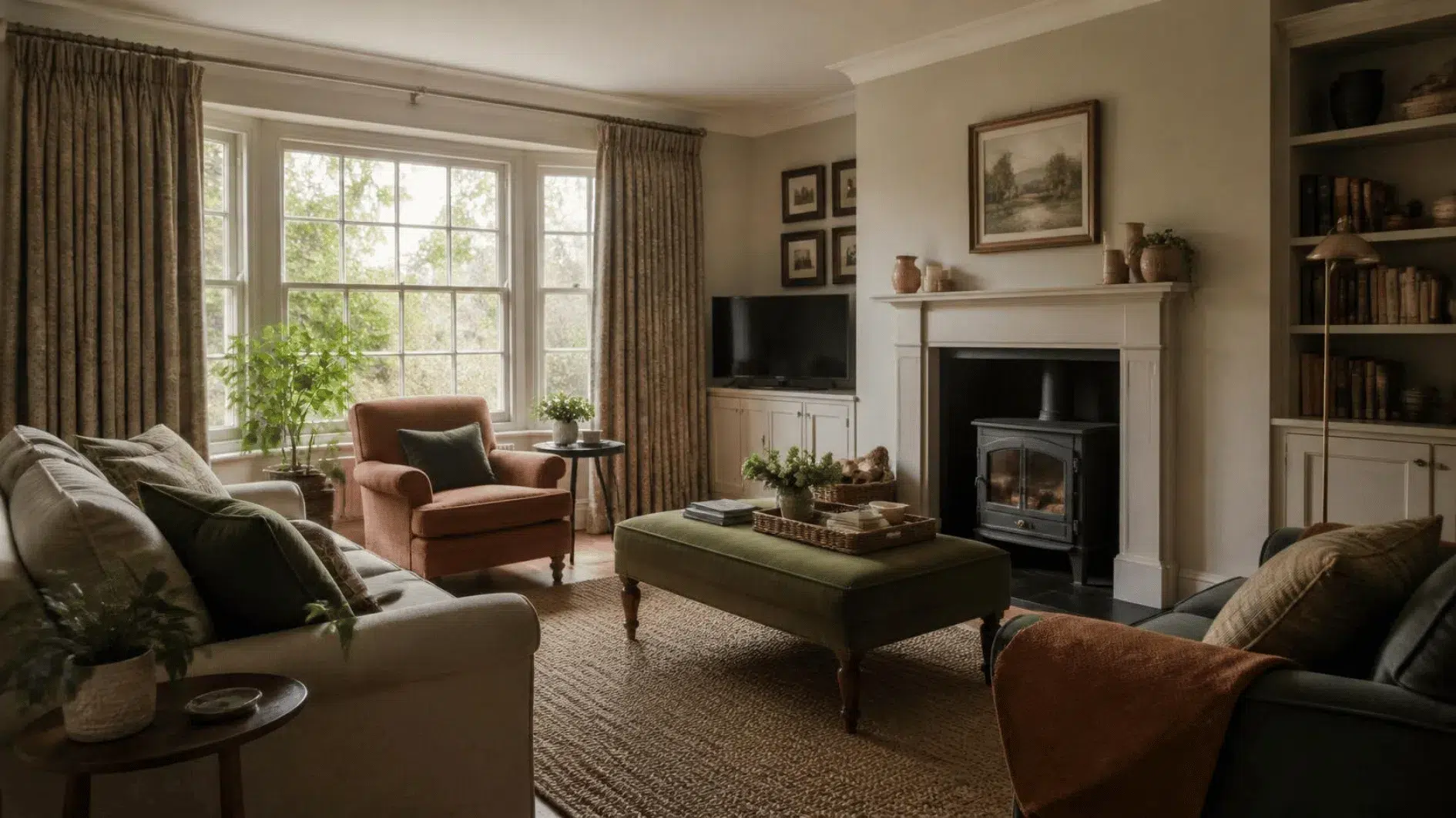
Curtains, upholstered seating and rugs can absorb some sound reflections inside a room, depending on their size, thickness, placement and the frequency of the sound. The effect varies; a thin curtain is not a substitute for acoustic construction.
Consider textiles for comfort and room function first. A rug should not introduce a trip hazard, and curtains must be compatible with windows, heaters and safe fittings.
Our How to Reduce Noise at Home guide explains the distinction between reducing reverberation and limiting sound transmission.
Be Realistic About Neighbour and Traffic Noise
External noise may require measures beyond furnishing changes. Gaps, windows, partitions and structural details influence sound transmission, and results vary between buildings.
Avoid sealing ventilation openings, blocking fire exits or adding heavy window treatments without considering safety and the building’s requirements. Tenants may also need permission before making alterations.
For persistent or serious issues, obtain advice from a suitably qualified professional or relevant housing contact rather than relying on unverified soundproofing claims.
Consider the Noise of Everyday Equipment
Washing machines, fans, refrigerators and other appliances contribute background sound to many homes. Unexpected rattling or a marked increase in noise can indicate a maintenance or installation issue.
Follow the manufacturer’s guidance on levelling, servicing and clearances. Do not disconnect safety features or restrict airflow to make equipment quieter.
Sometimes planning when a noisy task happens, where practical and respectful of others, helps more than buying a decorative acoustic product.
Choose Lighting That Supports Each Activity
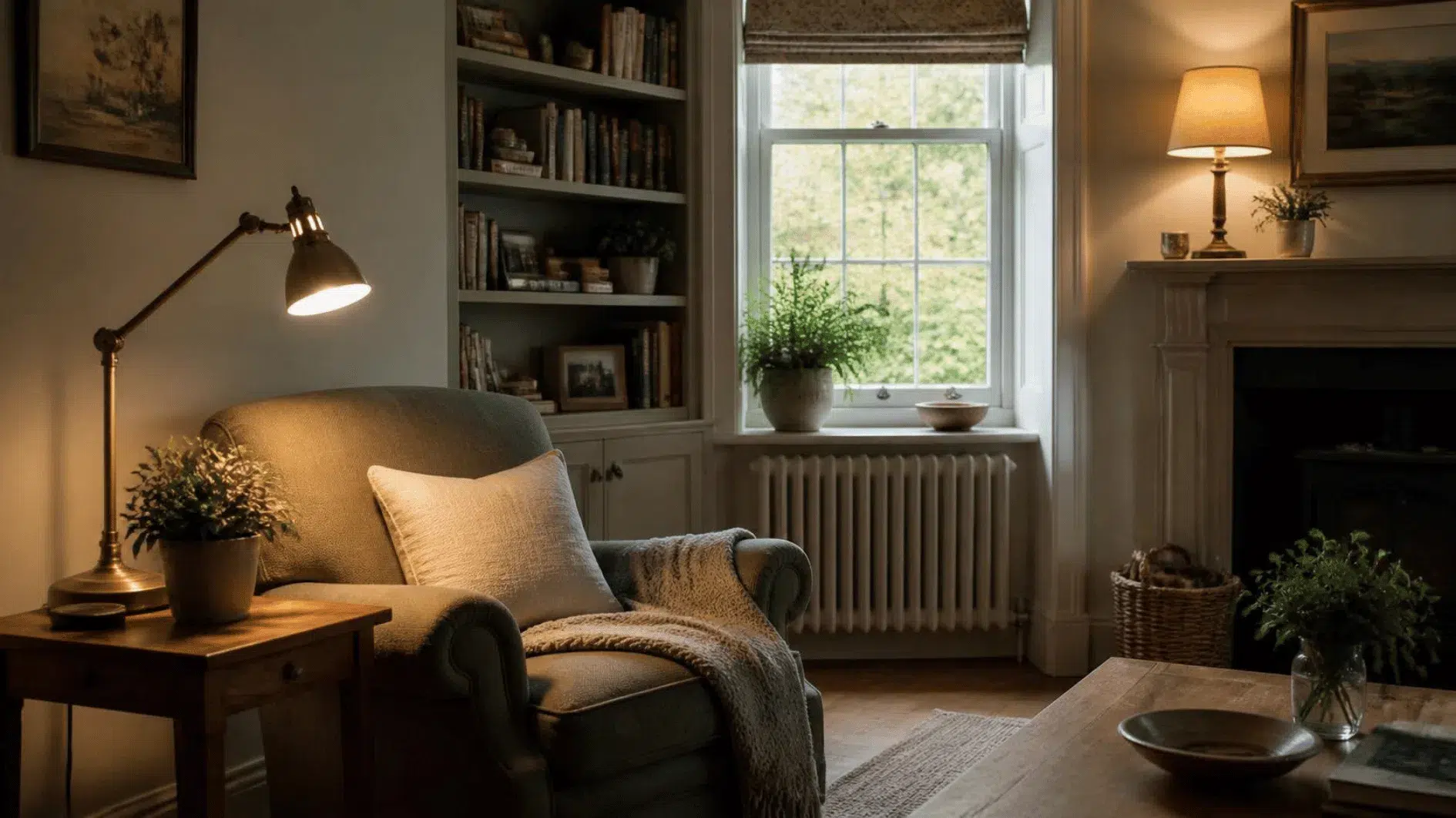
A room may need bright, clear light for reading or preparing food and gentler ambient lighting for other moments. One fixed light level rarely serves every activity equally well.
Consider how natural daylight changes and whether glare falls on a screen, television or seat. Move lamps or adjust shading before buying extra fittings.
Our lighting for a sitting room guide
Reduce Glare Without Making a Room Too Dark
Strong reflections from windows, bare bulbs and glossy surfaces can be uncomfortable during particular tasks. Try changing a screen position, adjusting a blind or directing a lamp towards the work rather than the eyes.
Avoid making pathways or stairs too dim in the pursuit of a soft atmosphere. Safe, sufficient lighting remains essential, especially where people need different levels of illumination.
Use suitable fittings and lamp specifications, and follow electrical safety guidance when making changes.
Use Adjustable Light Where It Is Useful
Adjustable lamps, compatible dimmers or lighting scenes can help a room serve changing needs, but they are optional. A correctly positioned ordinary lamp may solve the problem more simply.
Check compatibility when using dimmable bulbs or smart controls. A dimmer and lamp must be suited to each other, and specialist electrical work should be carried out appropriately.
Choose Colour Based on Existing Light and Finishes
Muted colour palettes may appear restrained, but a calm room does not need to be beige. Consider how walls, flooring, furniture and daylight work together and avoid repainting only because a colour is trending.
A stronger colour can be comfortable when balanced with the rest of the room. What matters is the relationship among surfaces and whether occupants enjoy the result.
For comparing undertones and paint samples, see our warm neutral colours guide. Colour is one consideration alongside layout, lighting and sound.
Use Texture Without Filling Every Surface
Timber grain, linen, ceramics and a well-chosen wool throw can introduce character without many decorative pieces. Texture provides interest, but a collection of heavily patterned objects may also compete visually.
Select materials you can maintain, and that suit the room’s wear, cleaning and comfort requirements. A tactile preference is personal; not everyone enjoys the same fabrics or finishes.
Our natural materials for the home guide
Leave Practical Space on Worktops and Tables
A useful empty surface is not wasted space. It allows meals to be prepared, books to be opened or keys to be found without clearing a collection of decorative objects first.
Decide what genuinely belongs on each surface. A kitchen counter might need everyday equipment; a bedside table might need a lamp, water and personal items.
The goal is not a bare appearance. It is to make ordinary activities easier and reduce unnecessary moving and searching.
Keep Cables and Technology Practical and Safe
Chargers, extension leads and screens can contribute to visual busyness. A designated charging location and suitable cable management may make a surface simpler to use.
Electrical safety takes priority. Do not tightly bundle cables in a way that causes overheating, conceal damaged wiring or obstruct ventilation. Use products and equipment according to their instructions.
Consider whether a device actually needs to be in a particular room. Moving unused equipment may be simpler than buying decorative covers.
Make the Entrance Easier to Use
A hallway may become busy because coats, bags, letters and shoes arrive there every day. Put suitable storage near the point of use, without narrowing escape routes or obstructing doors.
Hooks, trays and shoe storage should be fixed and used safely. Choose a capacity suited to the household rather than creating many tiny categories that people find difficult to maintain.
An entrance works calmly when items can be put away quickly and found again, even if it is not perfectly tidy.
Keep Bedroom Comfort and Access in View
Bedrooms benefit from practical circulation around the bed, accessible lighting and storage that suits the people using them. Consider how the room works before adding extra throws or furniture.
Glare, external noise and awkward bedside layouts may cause more inconvenience than the colour of the duvet cover. Start with a specific difficulty and the options available.
Consider a Calm Working Corner at Home
A home-working area should support the work being done: sufficient light, appropriate seating, clear access to required equipment and suitable arrangements for calls or concentration.
Group frequently used items within reach, but preserve ventilation around electronics and safe cable routes. Adjust the environment to individual accessibility and ergonomic needs.
If a shared room needs different functions, agree on realistic boundaries where possible. Decorative changes alone cannot resolve an unsuitable workload or a lack of proper breaks.
Create Calm Spaces in a Shared Household
What feels relaxing to one person may be inconvenient to another. People differ in their tolerance for sound, light, visual detail and physical textures.
Discuss the use of common areas and try reversible adjustments where preferences conflict. Someone may want strong reading light while another prefers a dimmer atmosphere; separate lamps and seating arrangements can be more practical than one fixed rule.
Children and adults should not be expected to stay silent or keep every belonging out of sight just to maintain a design scheme.
Respect Different Sensory and Accessibility Needs
There is no universal definition of a sensory-friendly home. Some people prefer reduced noise and soft textures, while others find certain sounds, colours or levels of light useful or reassuring.
Ask the people using the space which features are uncomfortable or helpful. Prioritise accessibility, individual choice and functional control rather than applying a standardised sensory aesthetic.
Our Sensory-Friendly Home guide covers adaptable lighting, sound, seating and layout without presenting interior changes as clinical treatments.
Try Renter-Friendly Changes Before Renovating
A rented flat may allow furniture rearrangement, freestanding lamps, suitable curtains or accessible storage without permanent construction. Review the tenancy terms and permissions before drilling or making alterations.
Do not block ventilation, interfere with fire doors or modify electrical fittings without appropriate permission and qualified help.
Small reversible changes can be tested and refined. Keep any improvement that works, even if it is not visually dramatic.
Improve the Room Before Buying More Products
A useful first step is to move or remove nothing permanently: reposition a chair, group existing items and observe how light and sound change in different parts of the room.
If something must be bought, identify the specific problem it will solve. An expensive acoustic panel, lamp, or storage box may be unnecessary if the issue can be addressed through maintenance or rearrangement.
Simple Calm Home Changes by Problem
| Everyday difficulty | Possible first step | What to check |
|---|---|---|
| Busy tabletop | Group essential items and clear a usable area | Keep frequently needed objects accessible |
| Echo in a sitting room | Review existing soft furnishings and hard surfaces | Textiles soften reflections, not all outside noise |
| Harsh screen glare | Change the screen angle or window shading | Maintain safe task and pathway lighting |
| Crowded route | Reposition movable furniture | Preserve access, door opening and exit routes |
| Noisy appliance | Check installation and maintenance instructions | Do not restrict ventilation or bypass safety features |
| Competing room activities | Create flexible working and relaxing zones | Respect all household members’ needs |
| Unruly cables | Use appropriate cable management | Avoid overheating and damaged electrical fittings |
Treat each example as an experiment, not a promise of a particular emotional effect. A meaningful improvement is one that makes the space easier to use.
Common Mistakes When Trying to Create a Calm Home
- Making calm a decorating rule. People can prefer different colours and amounts of detail.
- Removing useful furniture. Function and accessibility matter more than emptiness.
- Expecting curtains to soundproof a room. Internal echo and incoming noise differ.
- Making every room dim. Safety and task lighting must remain adequate.
- Buying organisers before observing habits. Storage should fit real use.
- Ignoring household differences. Shared spaces need discussion and choice.
- Blocking vents or exits. Never trade building safety for a quieter appearance.
- Claiming design treats health conditions. Environmental comfort is not clinical care.
A Calm Home Ideas Checklist
- Choose one room and a specific difficulty to address.
- Observe how the space is used during a normal day.
- Keep circulation, emergency access and accessibility clear.
- Check whether lighting suits each task and occupant.
- Identify whether a noise issue is reverberation, equipment or sound transmission.
- Group frequently used objects at their point of use.
- Leave work surfaces usable without enforcing a bare aesthetic.
- Keep materials, rugs and furniture safe and practical to maintain.
- Ask other household members what changes suit them.
- Test reversible improvements before buying or renovating.
Frequently Asked Questions About Calm Home Ideas
How can I make my home feel calmer without buying anything?
Start with a specific practical issue. Move a chair to open a route, group commonly used objects, adjust existing window shading or improve access to a suitable reading lamp.
Does a calm home have to be minimalist?
No. A room can contain colour, books and family belongings while remaining organised around the people and activities that use it.
Do rugs and curtains soundproof a home?
They may reduce some reflections and echoes within a room, but they do not reliably stop sound transmission through windows, walls or floors.
Which colours make a room calming?
There is no universal calming colour. Personal preference, daylight, existing finishes and how the room functions all contribute to the result.
What is the difference between cosy and calm interiors?
Cosiness often emphasises comfort and warmth. A calm interior is more about avoiding unwanted distraction and making the space practical and controllable.
Can changes to a room treat sensory difficulties or anxiety?
Interior adjustments may make an environment more comfortable for an individual, but they are not medical or psychological treatments. Seek appropriately qualified support for health concerns.
Make a Calmer Home Work for Real Life
The most useful calm home ideas address a specific problem: unwanted glare, a noisy appliance, an awkward route or a surface that is difficult to use. Often, the first improvement costs little and keeps the character of the room intact.
Allow different people to choose the conditions that work for them. A quieter, less visually busy home is not a perfect photograph; it is a place where everyday life feels practical, accessible and personal.
CALM SPACES · PRACTICAL GUIDES
Explore Calm Spaces

Leave a Reply