

NATURAL LIVING · NATURAL HOME
Natural Home Decor: A Practical Guide to Wood, Linen and Texture
Use timber, linen, ceramics, texture and light to shape a comfortable, natural-feeling home—without replacing furniture that already works.
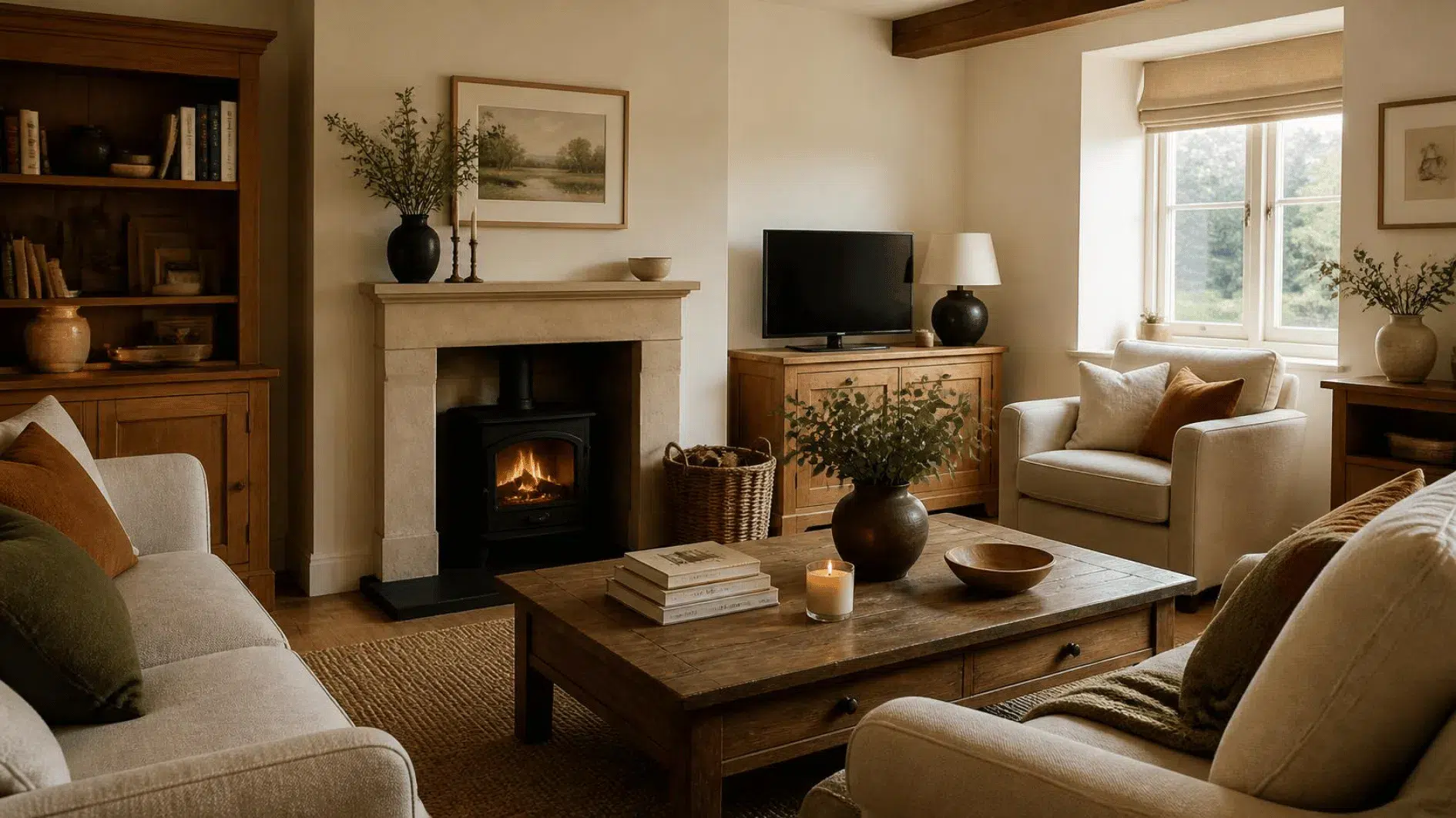
Natural home decor is often pictured as pale rooms filled with wood, woven baskets and linen. Yet a convincing natural interior does not depend on one colour scheme or a long list of new accessories. It starts with the materials already in the room and how they serve the people who use it.
Timber grain, textured fabric, ceramic objects, useful lighting and suitable greenery can work together without making the room cluttered or difficult to maintain. The details matter: where a piece is placed, how it wears, whether it can be cleaned and whether it suits its purpose.
This guide focuses on practical ways to use those elements in real British homes, with room-by-room advice and careful distinctions between natural appearance, material suitability and environmental claims.
What Is Natural Home Decor?
Natural home decor is an approach to furnishing and styling that makes visible use of materials, colours and textures associated with the natural world. Timber grain, linen weave, wool, stone, clay and greenery can all play a part. The aim is not to fill a room with objects described as natural, but to create a coherent setting where each element has a useful or meaningful role.
A natural-feeling home might have a timber dining table and linen curtains, or a darker palette with ceramic lamps and tactile upholstery. It does not need to be beige, rustic or entirely handmade.
The strongest arrangements balance appearance with daily use: comfortable furniture, suitable maintenance, good lighting and space for belongings that matter.
Natural Does Not Automatically Mean Sustainable
Natural materials are not inherently lower-impact or ethically sourced. The effects of a product depend on factors such as raw-material sourcing, manufacturing, transport, useful life, repairability and its eventual disposal. A natural-looking composite or finish may also contain synthetic components. Our approach to sustainability explains why we avoid broad environmental claims.
When environmental impact matters, ask what a claim refers to and whether the seller provides meaningful details rather than relying on words such as eco, organic or sustainable without context.
Our sustainable materials guide
Begin With the Room You Already Have
Before buying accessories, identify the materials and colours already present in your flooring, major furniture, walls and upholstery. These form the room’s visual foundation whether you planned them or not.
A dark timber sideboard, painted cabinet or patterned sofa does not have to be replaced to create a natural atmosphere. Often a thoughtful textile, better lamp placement or simpler shelf arrangement will relate existing pieces more comfortably.
- Identify one or two materials already present in larger furniture.
- Notice which finishes feel dominant and which are accents.
- Choose changes that improve use or comfort as well as appearance.
- Try moving existing objects before shopping for replacements.
- Consider the light the room receives at different times of day.
Use Timber for Warmth and Structure
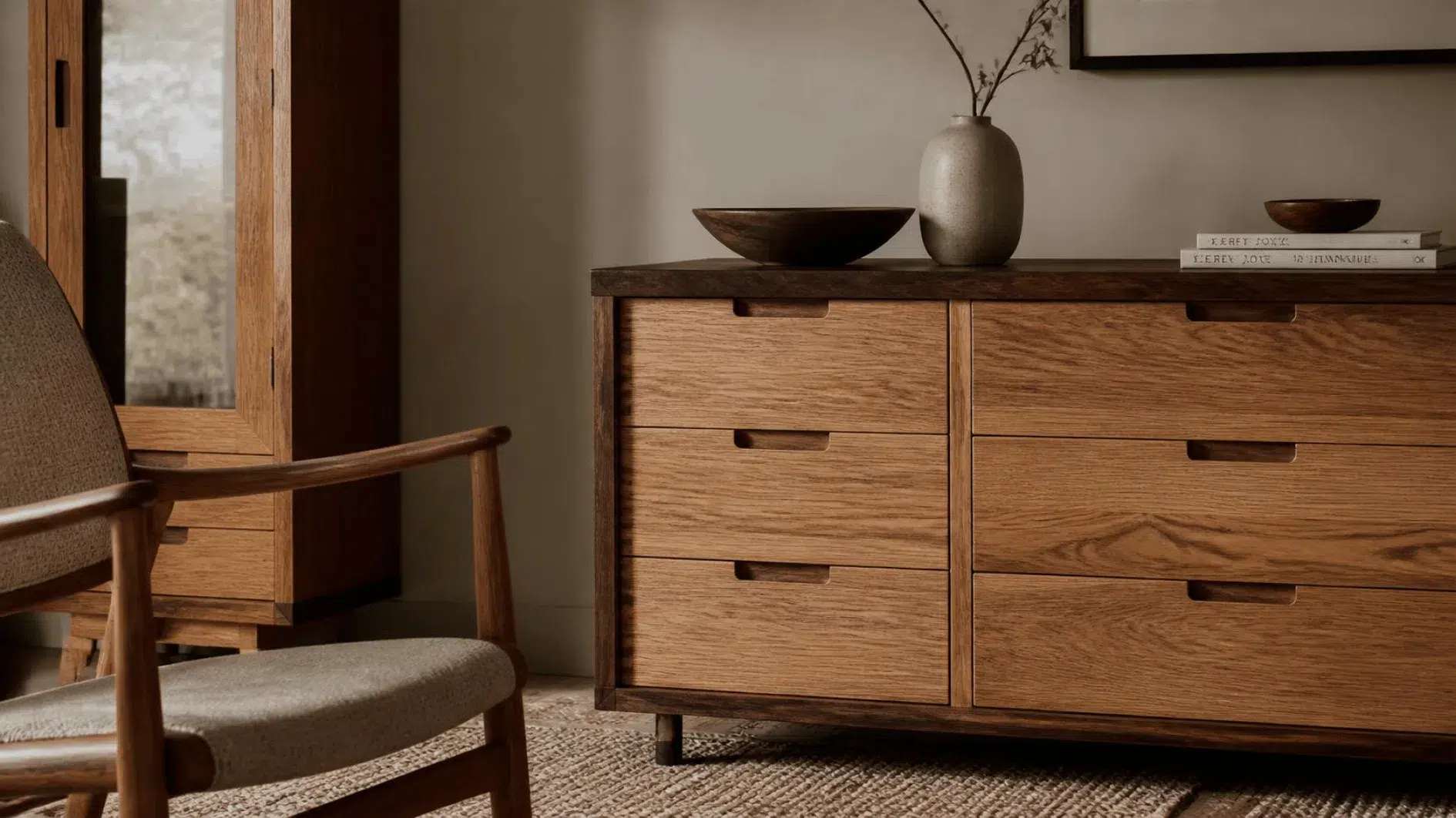
Wood can introduce grain, warmth and a sense of visual structure. It may appear in major furniture, a framed mirror, a small shelf, a tray or a single side table. You do not need a room full of timber for it to have an effect.
Pay attention to proportion. A substantial table might already provide enough natural texture, with quieter materials elsewhere. Lighter and darker timber tones can coexist when other elements create a visual connection.
Check material and finish descriptions when buying. Solid wood, veneer and wood-based panels have different construction and maintenance considerations; none should be judged solely from a photograph.
Mix Different Wood Tones Without Forcing a Match
Matching every wood surface perfectly is rarely necessary. Many rooms contain floorboards, furniture and accessories acquired over time. A balanced result often comes from repeating one undertone or distributing darker and lighter elements thoughtfully.
Try to avoid concentrating every heavy, dark object on one side of a room while the opposite side remains visually empty. A small dark frame, lamp base or bookcase can create a connection without replacing furniture.
If an existing table has attractive grain, let it remain visible rather than covering it with objects purely for decoration.
Choose Timber Furniture for Real Use
The finish and construction matter at least as much as the species or colour. Check for stable joints, surfaces appropriate to the task, manageable weight and realistic cleaning needs.
Timber can respond to changes in humidity, and certain finishes may require specific maintenance. Keep wooden furniture away from conditions that the manufacturer advises against and avoid assuming every natural oil or wax is suitable for every surface.
For second-hand or older pieces, our reclaimed wood furniture guide covers condition, coatings, movement and the difference between desirable patina and damage. Our Wooden Home Decor guide addresses smaller accents and practical styling.
Introduce Linen Where It Makes Sense
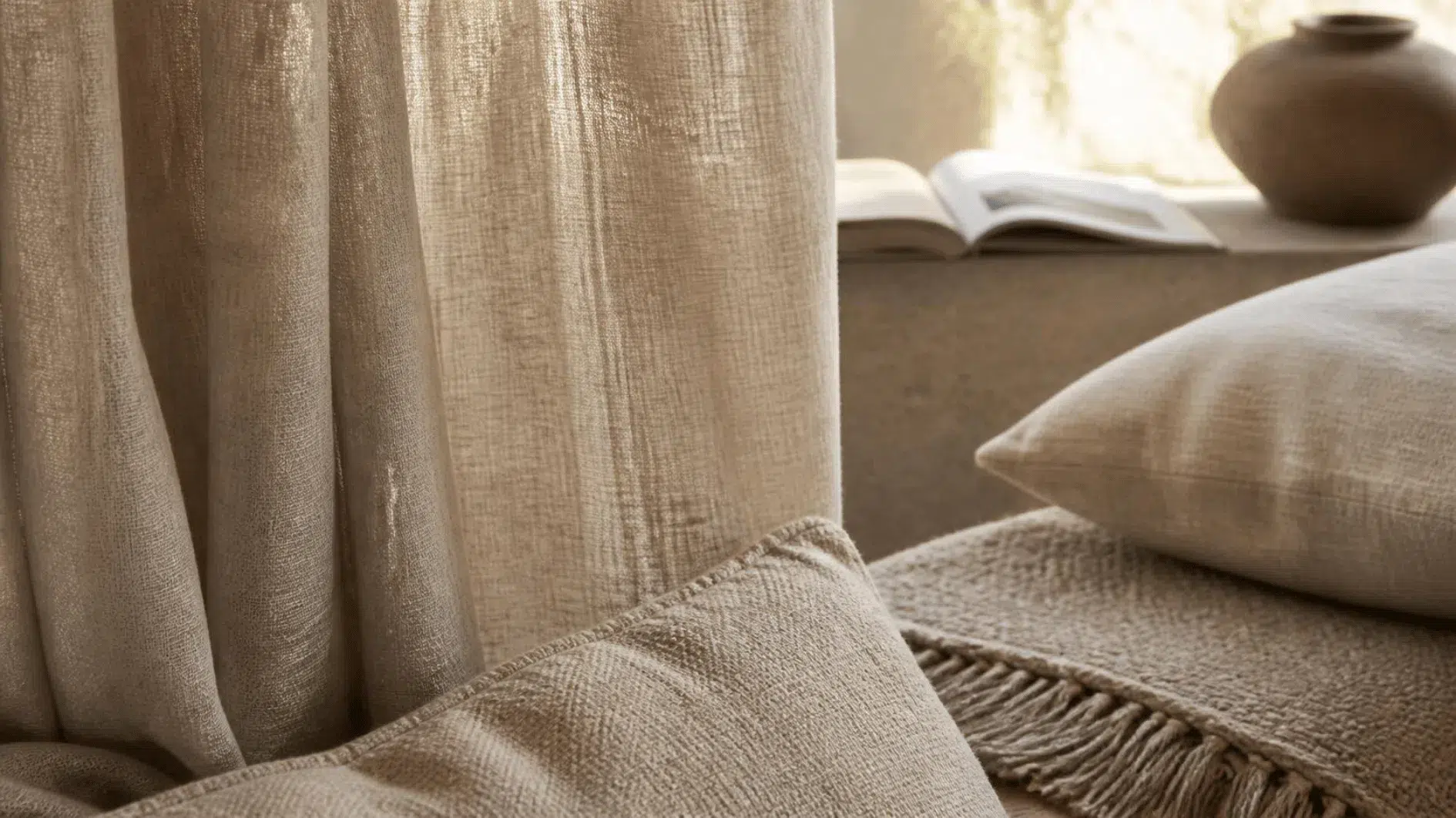
Linen is valued in interiors for its visible weave and relaxed drape. Curtains, cushions, table textiles and bed linen may all bring a tactile quality to a room, but the right use depends on fabric weight, finish, washing instructions and how much wear it will receive.
Do not assume every linen product behaves alike. A delicate open-weave curtain, a robust upholstery blend and a household tablecloth have different care needs.
Choose textiles for the role they need to perform. Natural-looking texture is helpful, but ease of laundering, light control and durability are often more important.
Use Curtains to Shape Light and Softness
Curtains can change the appearance of a room even when the furniture stays the same. A soft textured fabric may reduce the hard visual edges around a window, while its colour can connect flooring, walls and upholstery.
Consider privacy, warmth, light filtering and required lining. A pale, open weave may provide a different level of privacy and light control from a dense or lined fabric.
Measure the window and hanging arrangement rather than purchasing solely by the stated length. Check care labels and whether the fabric may change with laundering.
Layer Textiles Without Making the Room Busy
A sofa, armchair or bed may benefit from a small range of contrasting textures: a smoother upholstered surface alongside a softly woven cushion or throw. The effect comes from variation, not quantity.
Try working with existing textiles before buying new ones. Remove or relocate an item if multiple patterns and textures begin to compete for attention.
Choose Ceramics for Everyday Beauty and Use
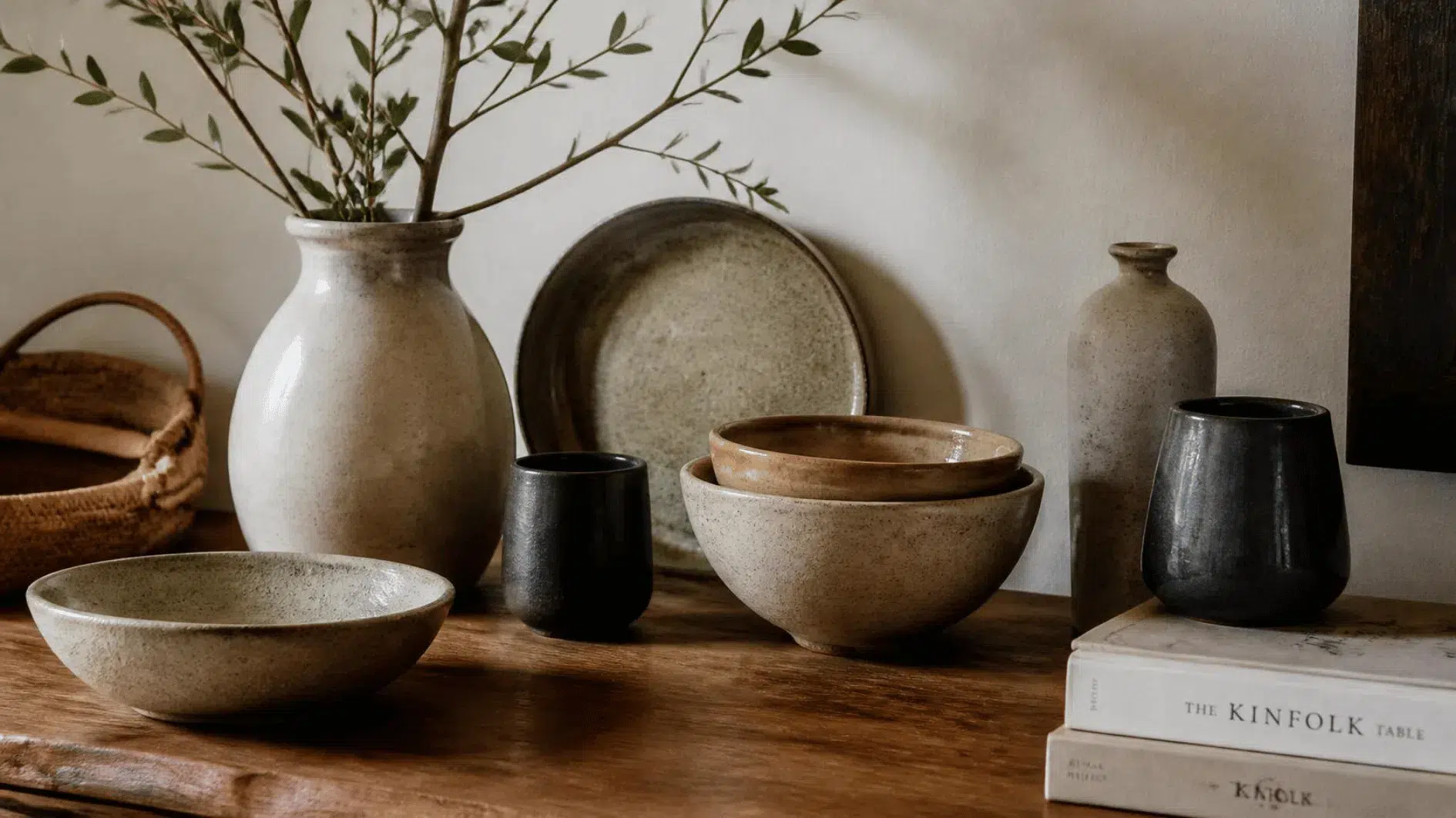
Ceramics can bring shape, weight and subtle surface variation to a natural interior. A useful bowl, vase, jug or lamp base can be both functional and visually pleasing. Handmade-looking details may have character, but they should not distract from whether the object is suitable for its intended purpose.
When choosing tableware, check that the item is described as appropriate for food contact and the tasks you intend. Decorative ceramics are not necessarily food-safe; care requirements also vary.
For decorative pieces, consider stability, edges and placement in shared rooms. A small number of objects that you actually use or appreciate often works better than filling every shelf.
Our Ceramic Home Decor guide explores scale, grouping, glazes, finishes and practical buying considerations.
Use Stone, Clay and Other Tactile Surfaces Carefully
Stone, clay, plaster-like finishes and textured ceramics may add visual depth, but they differ significantly in porosity, weight and care. An unsealed stone tray can behave differently from a glazed ceramic bowl or painted surface.
Avoid putting moisture-sensitive or absorbent materials in places where regular spills, heat or repeated cleaning are unavoidable unless they are suitable for that use.
A tray or small object may be enough to introduce an additional texture. There is no need to refinish a countertop or floor to achieve a natural look.
Use Woven Baskets and Rattan for Practical Storage
Woven materials can introduce a different scale of texture, particularly through a basket, lampshade or chair. Material quality and construction vary, so check load capacity, sharp ends, wear and how easy the item is to clean.
A basket is useful only when it stores something appropriately and remains accessible. In damp rooms, check whether the material is suitable for the conditions rather than assuming all natural fibres tolerate moisture well.
Avoid stacking heavy or fragile objects in a light woven container that is not built for them.
Build a Palette Around Existing Natural Tones
Natural palettes need not mean cream walls and pale oak. Earthy reds, deep greens, chalky whites, charcoal, warm browns and muted blues can all support a room containing timber and tactile textiles.
Begin with the colours already present in fixed surfaces and large furniture. Use a small number of accents that relate to those colours; avoid buying entirely new accessories just to make everything match.
If the room feels flat, contrast may help more than adding further shades: a dark timber object beside pale linen, or a smooth ceramic surface against a textured fabric.
Let Natural Textures Work With Good Lighting
Light changes how a surface reads. Timber grain and woven textiles may appear differently in daylight and under lamps; directional light can accentuate texture while poor task lighting makes a room less practical.
Start with the daylight available to the room, then provide suitable ambient and task lighting for reading, cooking and moving around safely. Warm-looking interiors do not require dim lamps in every corner.
Our lighting for a sitting room guide
Add Indoor Greenery Only Where Conditions Suit It
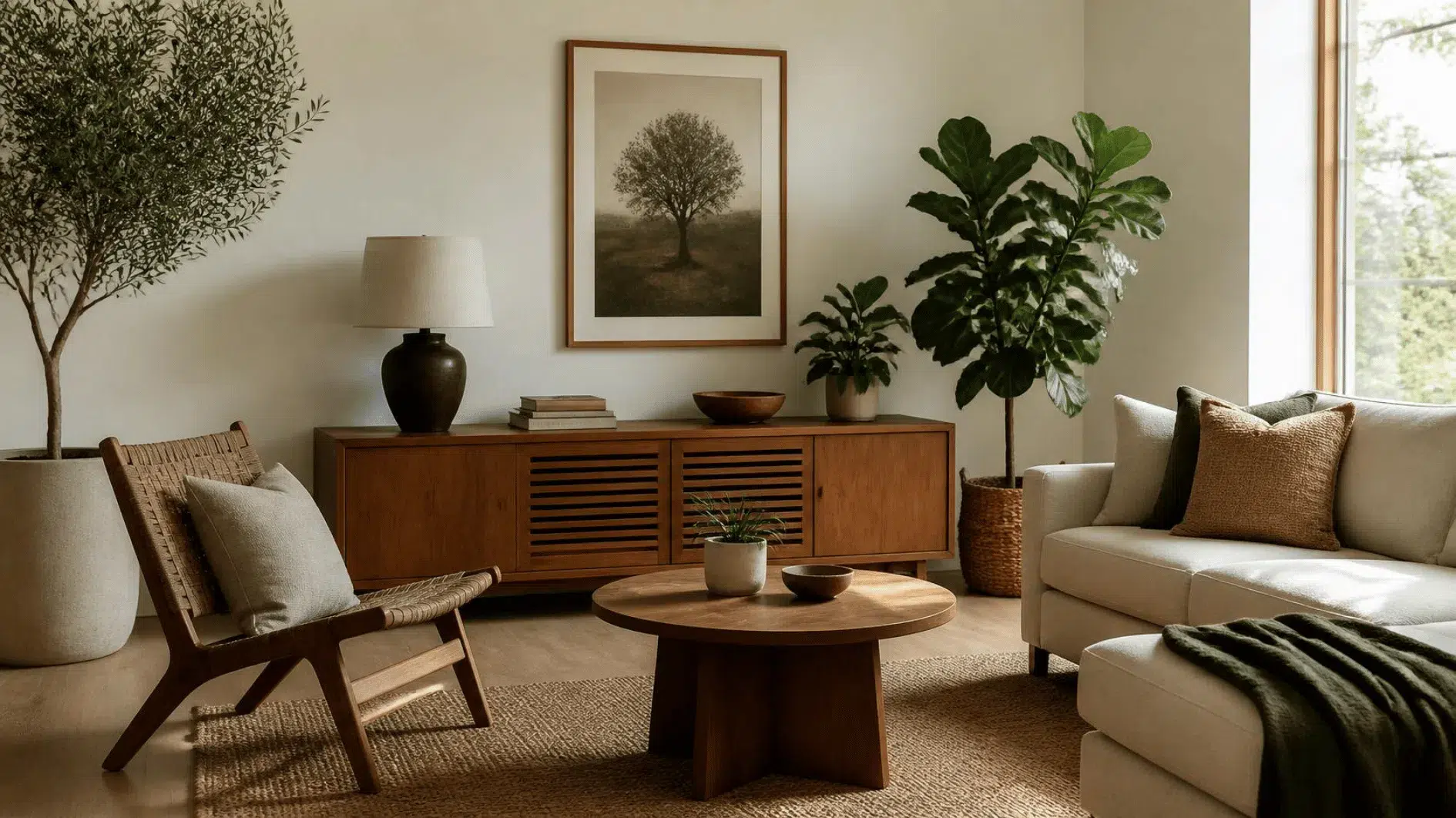
Plants can provide a living counterpoint to timber, fabric and ceramic, but greenery should not be treated as an essential styling accessory. Light, watering needs, available floor space and household safety matter.
Choose plants that can realistically be maintained in the room you have, and consider whether a pot or container will protect furniture from excess moisture.
Our indoor plants guidebiophilic design guide
Natural Home Decor Ideas for the Living Room
Look first at seating, layout and lighting. A comfortable sofa or chair, a table that fits how the room is used and a lamp near the relevant activity provide the practical structure.
- Use an existing timber table or sideboard as a focal material.
- Introduce fabric texture through a suitable cushion or throw rather than numerous accessories.
- Choose a small group of ceramics or personal objects for a shelf.
- Keep walking routes and everyday surfaces usable.
- Place plants according to their light needs, not simply an empty corner.
- Balance any visually heavy object with quieter areas of the room.
A room can remain colourful, lived-in and full of character while still drawing on natural materials.
Natural Textures for a More Comfortable Bedroom
The bedroom benefits from fabrics and storage chosen for everyday comfort and ease of care. Bedding, curtains, a bedside table and appropriate lighting are often the most important functional pieces.
Linen may suit certain bedding or curtains, but other fibres and fabric blends may be more appropriate for individual preferences or laundering needs. Consider comfort, allergies, temperature and the manufacturer’s instructions.
Avoid overcrowding the bedside area with decorative objects. Keep space for the essentials you genuinely reach for, and choose stable furniture suited to the room.
Natural Details in Kitchens and Dining Spaces
A timber board, ceramic serving piece or fabric table textile can add warmth without compromising worktop space. Choose food-contact items according to their designated use, hygiene requirements and care instructions.
Keep prep surfaces functional and do not add absorbent textiles or decorative objects too close to heat, flame or water.
If you enjoy a simple table setting, use pieces you already own and arrange them around the meal rather than creating a display that gets in the way.
Natural-Looking Bathrooms Without Unnecessary Risk
Bathrooms are frequently damp and require surfaces that tolerate moisture and regular cleaning. Timber, woven fibres and natural stone may need special protection or may be unsuitable for certain positions.
Choose bathroom storage and accessories for stability, ease of cleaning and water resistance first. A ceramic soap dish or appropriately finished small accessory can introduce texture without creating maintenance problems.
Keep products within safe reach and check specific care requirements rather than assuming natural materials are automatically better for wet conditions.
Make the Hallway Useful Before Decorative
An entrance needs safe circulation and practical places for keys, coats, shoes or bags. Timber hooks, a suitable small console or a woven basket may work well when they fit the dimensions and storage needs.
Measure passage widths, consider how doors open and keep heavier belongings securely stored. Wall-mounted fittings must be appropriate for the wall and intended load.
Natural decor should support the hallway’s daily function rather than crowd its limited space.
Balance Natural Pieces With Modern Materials
A natural interior does not need to exclude painted metal, glass, recycled products or durable modern fabrics. Often a few tactile materials look stronger against simpler, more practical backgrounds.
If an existing synthetic textile or laminate piece is serving the room well, replacing it simply to achieve an all-natural appearance may add unnecessary cost and waste.
Our sustainable interior design guide
Consider Repair, Vintage Pieces and Second-Hand Finds
Older furniture can introduce history, individual texture and character. Check structural condition, fit for purpose, finish and any safety concerns rather than assuming age makes an item higher quality.
Our second hand furniture guide
Small repairs, new appropriate handles or careful maintenance may improve a piece you already own without requiring a replacement.
Create a Natural Look Without Starting Over
Many changes are inexpensive or free. Rearrange ceramics already in the cupboard, uncover an attractive timber surface, move a lamp, reuse a tray or change where a plant receives light.
| What you want to improve | Try this first |
|---|---|
| A room feels visually flat | Look for contrast between existing smooth and textured objects. |
| A shelf feels crowded | Group a few useful or meaningful items and leave space around them. |
| Wood tones seem disconnected | Repeat a related accent elsewhere rather than replacing furniture. |
| Textiles do not suit daily life | Adjust placement or use before buying new pieces. |
| The room feels awkward | Revisit furniture layout, safe access and lighting. |
If you do buy something, choose for practical use, material suitability and realistic maintenance. A lower price or natural-looking label is not enough on its own.
Common Natural Home Decor Mistakes
- Assuming natural means sustainable. Impact depends on sourcing, production, lifespan and other factors.
- Buying too many accents. Multiple baskets, vases and cushions may make a room feel crowded.
- Choosing by appearance alone. Material care, durability, weight and suitability matter.
- Matching every finish exactly. Considered variation can add more interest than rigid uniformity.
- Ignoring water and humidity. Some fibres, finishes and stone surfaces need special attention.
- Replacing serviceable furniture. Restyling or repair may be more appropriate.
- Using poor lighting for atmosphere. Rooms still need adequate task and circulation light.
- Relying on a photograph. Your room’s dimensions and daily routines should determine the arrangement.
A Practical Natural Home Decor Checklist
- Identify existing materials in major furniture, flooring and finishes.
- Keep durable pieces that already suit the room.
- Choose a small number of material accents with practical roles.
- Check how wood, fabric, ceramic and woven products should be maintained.
- Make sure lighting suits the room’s actual activities.
- Balance open space with objects you use and enjoy.
- Choose plants only when light and care requirements can be met.
- Review moisture, safety, stability and cleaning needs.
- Consider repair or second-hand options before buying new.
- Treat environmental claims as questions requiring evidence, not aesthetic labels.
Frequently Asked Questions About Natural Home Decor
What is natural home decor?
Natural home decor uses materials, textures and colours such as timber, linen, wool, ceramics, stone and greenery to create a considered interior. It does not require an entirely natural-material home or a particular colour palette.
How can I make my home look more natural without buying new furniture?
Start with existing timber surfaces, rearrange meaningful ceramics, improve lighting and add texture through textiles you already own. Change placement before considering purchases.
Can I mix wood tones in one room?
Yes. Different wood tones can work together when proportion, undertones and the surrounding colours create balance. Exact matching is not essential.
Is linen a good material for home decor?
Linen can provide appealing texture and drape, but performance depends on weave, weight, finishing and intended use. Always consider laundering and wear requirements.
Are handmade ceramics better than mass-produced ceramics?
Not automatically. Assess quality, stability, appropriate use and care. For dishes and food-contact items, suitability and safety matter more than how the item was made.
Is natural home decor environmentally friendly?
Not necessarily. Natural appearance is not proof of lower impact. Sourcing, manufacturing, transport, longevity and disposal all matter, as do opportunities to repair and reuse existing belongings.
Let Natural Materials Serve the Home
The most successful natural interiors are not assembled from a shopping list. They use material texture, colour and light to support rooms that are comfortable, practical and personal.
Start with the wood, textiles and objects already around you. Add or change something only when it improves the way a space works, feels or can be maintained. The result can be warm and considered without becoming crowded, expensive or difficult to live in.
NATURAL HOME · MATERIALS & TEXTURE
Explore Natural Home Decor

Leave a Reply