

SUSTAINABLE HOME · SUSTAINABLE DECOR
Reclaimed Wood Furniture: What to Know Before You Buy
A practical guide to reclaimed wood furniture—how to assess timber source, construction, moisture, old coatings, repairs, surface character and whether the finished piece is genuinely built for long-term use.

Reclaimed wood furniture can be appealing for two different reasons: it keeps an existing material in circulation, and it often carries colour, grain and surface marks that new timber cannot reproduce quickly. Neither reason, however, guarantees that the finished furniture is well made.
The words “reclaimed wood” describe the history of the material, not the quality of the product. Timber may have come from an old building, floor, beam, workshop or previous piece of furniture, but it still needs to be dry, stable, appropriate for its new use and assembled into a structure that can survive everyday life.
This guide explains what to inspect before buying, how to separate genuine material character from avoidable damage, and when reclaimed timber is a meaningful choice rather than simply a marketing story.
What Reclaimed Wood Furniture Means
Reclaimed wood furniture is made using timber recovered from a previous use rather than newly harvested specifically for the product. The source may include structural beams, floorboards, old industrial timber, agricultural buildings, workshops or dismantled furniture.
That history can reduce demand for new timber and keep usable material in circulation, but the benefit depends on what happens next. If the reclaimed timber is unstable, heavily processed, poorly joined or made into short-lived furniture, the source story alone does not make the finished product durable.
Reclaimed, Recycled and Reused Are Not the Same
| Term | Typical meaning |
|---|---|
| Reclaimed timber | Wood recovered from a previous use and prepared for a new application. |
| Recycled wood | Wood waste processed into another material or product, which can include boards or composites. |
| Reused furniture | An existing furniture piece kept in service with little or no material reprocessing. |
All three can play a role in lower-waste interiors, but they answer different questions. Our sustainable materials guide explains these distinctions in a wider material context.
Ask Where the Timber Came From
A seller does not always know the exact building or previous product, but the more specific the provenance, the easier it is to understand what “reclaimed” means.
- Was the timber recovered from a building, floor, beam, pallet, railway-related use or previous furniture?
- Was it sourced directly by the maker or bought as prepared reclaimed stock?
- Has it been kiln-dried or otherwise conditioned for indoor furniture use?
- Were old fixings, coatings or contaminants removed or assessed?
- Is the entire piece reclaimed timber or only selected visible components?
Specific answers do not automatically prove quality, but vague phrases such as “reclaimed style” or “recycled look” should not be mistaken for material provenance.
How to Assess Authenticity
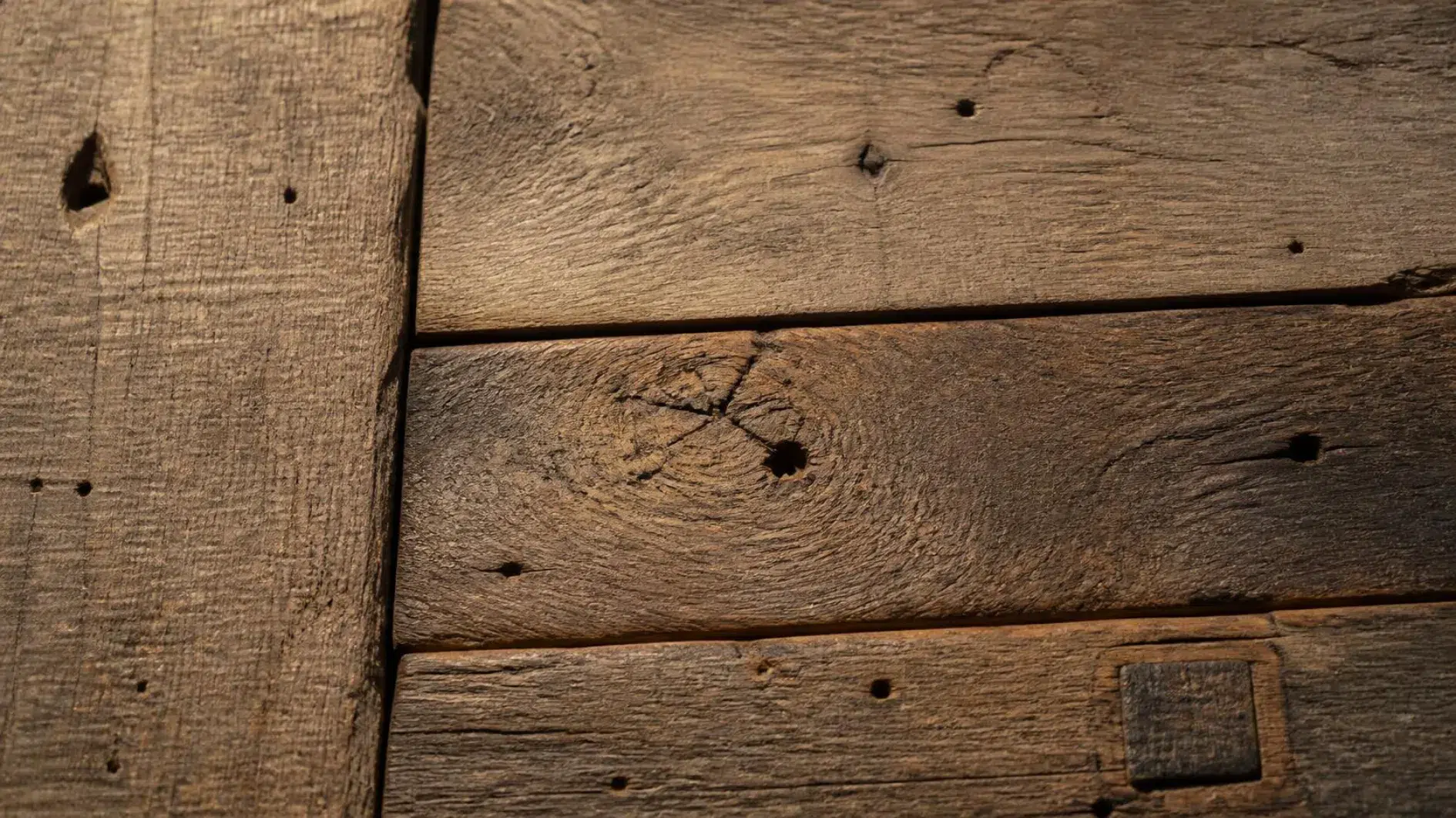
Authentic reclaimed timber often shows variation in colour, grain, old fixing holes, surface wear or historical machining. Those features can be genuine, but they are not proof by themselves because new timber can be distressed deliberately.
Look for consistency between the seller’s provenance, the visible material and the construction. If authenticity matters to you, ask for sourcing information rather than relying on an intentionally aged finish.
Judge the Furniture, Not Just the Timber

Beautiful old timber can still be assembled badly. Inspect the piece exactly as you would any other furniture.
- Check joints for movement and widening gaps.
- Look underneath tables and cabinets at rails, corner blocks and fixings.
- Open every drawer and door.
- Check whether heavy boards are supported properly.
- Make sure the top is fixed in a way that allows normal timber movement where appropriate.
Our sustainable furniture guide provides a broader construction and repairability checklist for new furniture.
Check Moisture Damage and Movement
Timber changes dimension as moisture conditions change. Reclaimed boards may already have moved over many years, but that does not mean they are automatically stable in a new indoor environment.
Look for pronounced cupping, twist, open joints, soft areas, black staining, swollen composite components or evidence that boards were assembled before they were ready for indoor use. On large tabletops, view the surface from a low angle to see whether it is reasonably flat.
Look for Signs of Pests
Old holes in timber can be part of its history, but you should distinguish historical evidence from signs of current activity. Inspect joints, undersides and less-finished areas for fresh-looking debris, crumbling wood or unexplained new dust.
If you are uncertain about active infestation, do not bring the furniture into the home until it has been assessed appropriately. An attractive reclaimed surface is not worth introducing a preventable problem.
Old Paint, Stain and Unknown Coatings
Reclaimed timber can carry remnants of previous paint, stain, oil, adhesive or industrial finishes. Some makers remove these completely; others retain them as part of the visual character.
If you plan to sand, strip or refinish the piece, do not assume an unknown old coating is harmless. Ask what preparation has already been carried out and use appropriate precautions or professional advice before creating dust from unidentified finishes.
Nail Holes, Saw Marks and Patina
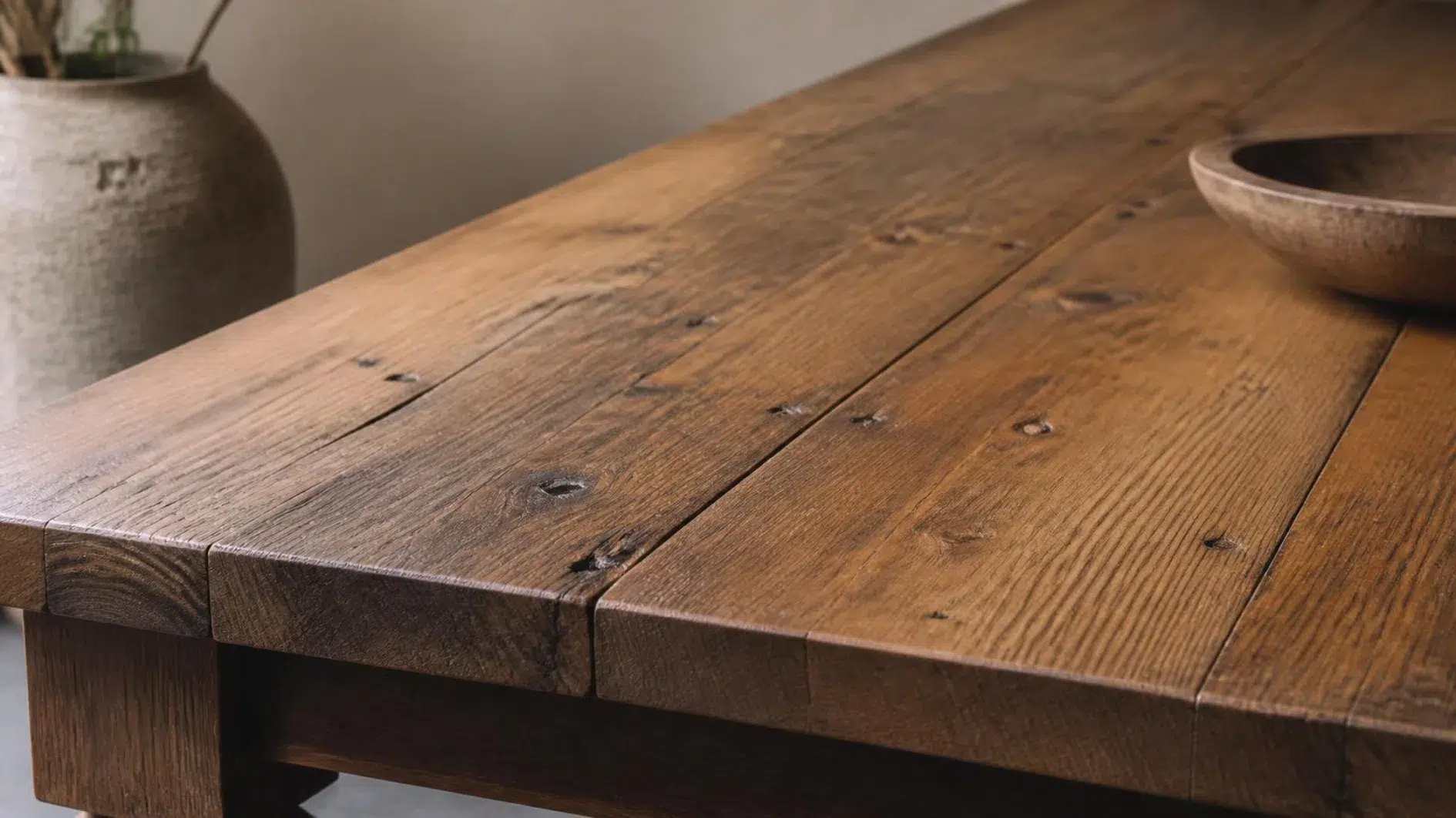
Old nail holes, saw marks, checking and colour variation can be part of reclaimed timber’s appeal. The key is whether those marks affect function.
- A filled nail hole in a tabletop may be purely visual.
- A deep void at a leg joint may affect strength.
- Rough texture may be attractive on a cabinet front but irritating on a dining surface.
- Pronounced ridges can make glasses or tableware unstable.
Character should not become an excuse for poor usability.
Cracks, Splits and Filled Defects
Small checks and surface cracks can be normal in older timber. Larger splits deserve closer attention, especially near fixings, table ends, load-bearing joints and thin sections.
Filled defects are not automatically a problem. Ask what filler or resin was used, whether the repair is stable and whether it suits the intended surface. A decorative fill on a tabletop is different from a repair trying to hold a failed structural joint together.
Metal Fixings and Embedded Hardware
Reclaimed boards can contain old nails, screws, staples or fragments of previous fixings. Responsible preparation should identify and remove dangerous protrusions, but visible historical holes or deliberately retained metal may remain.
Run your hand carefully over accessible edges and inspect areas where people, clothing or cleaning cloths will make regular contact. Decorative history should not leave sharp hazards.
Surface Flatness and Everyday Use
The more tactile the reclaimed surface, the more important it is to think about the job. A deeply textured console top may be easy to live with. The same texture on a dining table can trap crumbs, catch cloths and make writing difficult.
Ask whether the surface has been planed, sanded, brushed or sealed, and whether it can be cleaned using ordinary household methods without damaging the finish.
New Finishes on Old Timber

A new finish can protect reclaimed timber and make it practical for modern use. Oil, wax, lacquer and other coatings each change appearance, maintenance and stain resistance.
- Ask what finish was applied.
- Check how spills should be cleaned.
- Find out whether the surface can be locally repaired.
- Ask how often maintenance is expected.
The best finish is not necessarily the most “natural” one; it is the one that gives the timber enough protection for its actual use while remaining maintainable.
Repairability
Reclaimed timber is often valuable precisely because it can be worked again. A good piece should allow sensible future repairs rather than relying on permanently bonded decorative construction.
Check whether legs, rails, handles, hinges and drawer components are accessible. If a tabletop is thick enough to be refinished or repaired, ask how much surface treatment has already been carried out and whether future sanding is realistic.
Reclaimed Wood Tables
Tables put reclaimed timber under demanding daily use. Stability, flatness and finish matter more than decorative character.
- Check the top for twist, cupping and large unsupported spans.
- Make sure glasses and plates sit securely.
- Inspect the underside for appropriate supports and sound fixings.
- Check whether the finish tolerates food, water and repeated wiping.
- Measure access and weight before arranging collection.
For general dining-table checks, including room fit and extension mechanisms, see our second hand dining table guide.
Cabinets, Sideboards and Storage
For storage furniture, inspect drawers, doors and interior surfaces as carefully as the exterior. Heavy reclaimed boards can place extra load on hinges and runners if the furniture has not been engineered appropriately.
Check backs, shelves and drawer bottoms for materials that differ from the reclaimed timber front. Mixed construction is not necessarily a problem, but the product description should not imply that every component is reclaimed wood when it is not.
Sustainability Claims and Evidence
“Made from reclaimed wood” is useful only when you understand what it applies to. A product may use reclaimed boards for the top while the frame, drawer boxes and backing are new materials.
Ask for the proportion or scope where practical. The most credible claims are specific: what material is reclaimed, where it came from or how it was sourced, and which components use it. Our sustainable furniture guide explains how to compare those claims with durability, repairability and whole-product construction.
Questions to Ask the Seller
- Where was the reclaimed timber sourced from?
- Which parts of the furniture are actually reclaimed wood?
- How was the timber dried or conditioned before manufacture?
- Were old nails, coatings or damaged areas removed or assessed?
- What finish has been applied?
- Are cracks, holes and colour differences intentional or repaired defects?
- Can the surface be refinished later?
- How should the furniture be cleaned and maintained?
- What warranty applies to the construction?
Common Buying Mistakes
- Assuming reclaimed automatically means sustainable. The finished product still needs to last.
- Buying for patina while ignoring unstable construction.
- Treating every hole or crack as harmless character.
- Ignoring unknown old coatings before refinishing.
- Accepting an excessively rough tabletop for a high-use dining surface.
- Assuming the whole piece is reclaimed when only the visible top is.
- Forgetting that heavy reclaimed furniture may be difficult to transport.
- Paying a premium for a vague provenance story without useful detail.
Reclaimed Wood Furniture Checklist
- Ask what “reclaimed” means for this specific product.
- Identify which components use reclaimed timber.
- Check joints, rails, legs and structural fixings.
- Inspect for moisture damage, excessive warping or soft areas.
- Look for signs of current pest activity.
- Ask about old coatings and surface preparation.
- Decide whether holes, cracks and texture affect everyday use.
- Check the new protective finish and maintenance requirements.
- Confirm the piece can be repaired or refinished later.
- Judge the whole furniture piece, not only the reclaimed-material story.
Frequently Asked Questions About Reclaimed Wood Furniture
Is reclaimed wood furniture sustainable?
It can keep existing timber in circulation and reduce demand for newly processed material, but the finished product still needs to be durable, suitable and well constructed. Reclaimed origin is one part of the assessment.
How can I tell if wood is really reclaimed?
Surface marks alone are not proof because new timber can be distressed. Ask the seller for specific provenance or sourcing information and check whether the claim explains which components use reclaimed wood.
Are cracks normal in reclaimed wood furniture?
Small checks and old surface marks can be normal. Larger splits, movement around joints or cracks affecting load-bearing areas deserve closer inspection.
Can reclaimed wood furniture be refinished?
Often, yes, but first identify the current and previous finishes and understand how much material can safely be removed. Veneered or thin components need a different approach from thick solid boards.
Is reclaimed wood furniture better than second hand furniture?
They solve different problems. Reclaimed furniture uses recovered material in a newly made piece, while second-hand furniture keeps an existing product in service. Either can be a good choice when condition, construction and suitability are strong.
Buy for the Furniture It Has Become
The history of reclaimed timber can add real material value and character, but the furniture still has to work in the present. Check provenance where it matters, inspect the structure, understand the finish, look closely at moisture and old coatings, and decide whether the texture suits daily use.
Buy because the piece is sound, useful and maintainable—not because “reclaimed” makes every compromise acceptable. When old timber is turned into genuinely durable furniture, its previous life becomes a strength rather than merely a story. For smaller timber pieces, browse our kitchen and dining collection.

Leave a Reply