

SUSTAINABLE HOME · SUSTAINABLE DECOR
Sustainable Furniture: What to Look For Before You Buy
A practical framework for judging furniture beyond vague “eco” language—looking at construction, material sourcing, repairability, finishes, upholstery, warranties and whether the piece is likely to stay useful for years.

Sustainable furniture is often marketed through one headline feature: FSC-certified timber, recycled fabric, local manufacture, reclaimed wood or a low-impact finish. Those details can be useful, but none of them tells you whether the whole piece is a good long-term purchase.
A better assessment starts with a more ordinary question: will this furniture stay useful? Construction quality, repairability, replaceable parts, material suitability, finish, dimensions and how easily the piece can adapt to a future room can matter as much as the headline sustainability claim.
For the material-level framework behind this article, read our sustainable materials guide. For whole-room decisions, see sustainable interior design. And when an existing product could do the job, our second hand furniture guide explains how to inspect it properly.
What Sustainable Furniture Really Means
There is no single feature that makes furniture sustainable. A piece may use certified timber but be difficult to repair. It may contain recycled fabric but have a weak frame. It may be locally made from imported materials, or durable but impossible to disassemble at end of life.
A practical assessment therefore combines several factors: whether the furniture is needed, how well it is made, what materials and finishes are used, whether the parts can be repaired, how long it is likely to remain useful and how specific the environmental evidence is.
Start by Asking Whether You Need It
The most sustainable furniture purchase may be no purchase at all. Before replacing a piece because a room has changed visually, ask whether it can be moved, repaired, refinished or used differently.
- Can an existing table or cabinet be adapted to the new layout?
- Can worn upholstery be replaced without discarding the frame?
- Would new handles or a repaired drawer solve the actual problem?
- Could a suitable second-hand piece meet the need instead?
Judge Construction Before Marketing
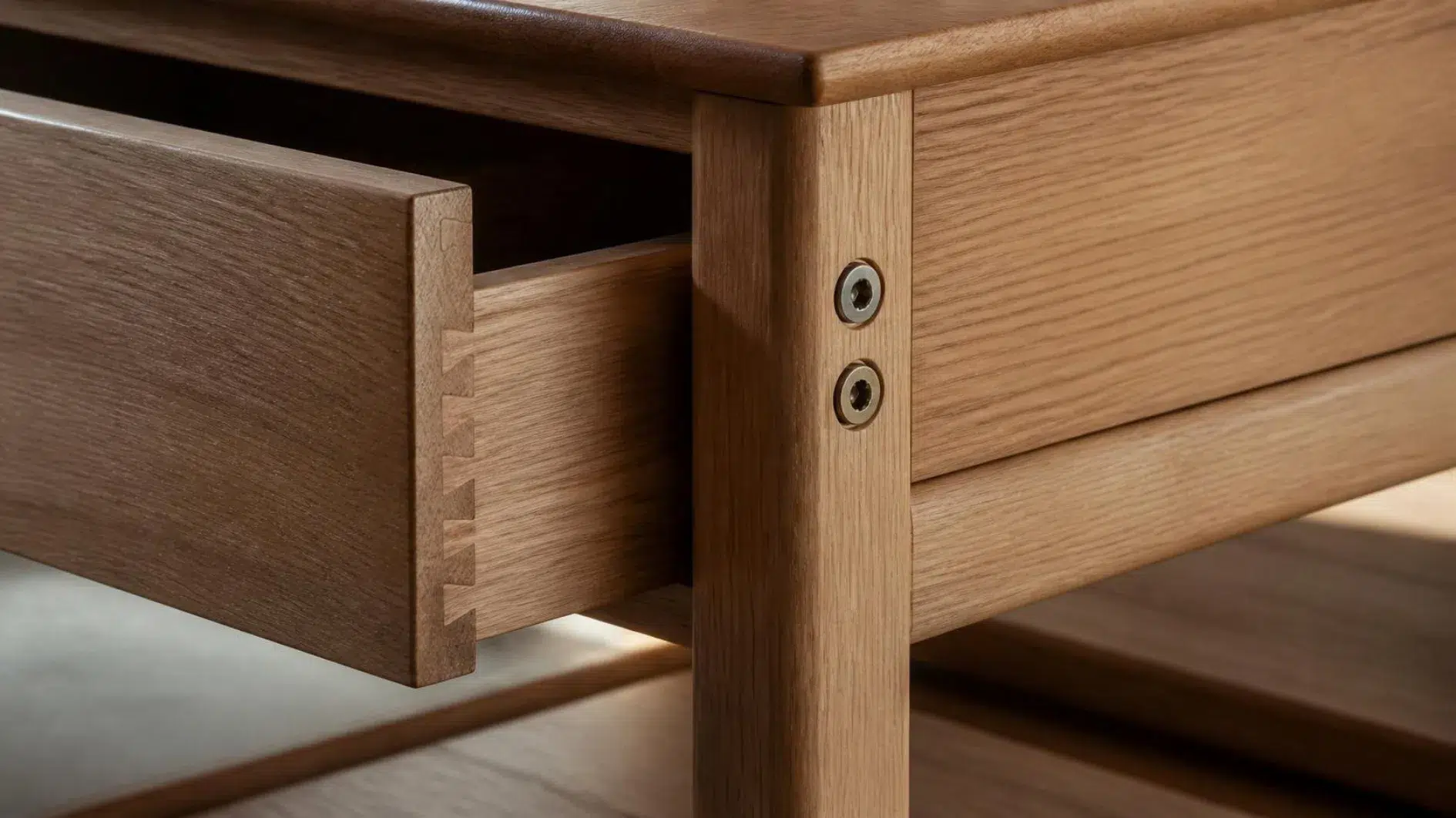
Construction often determines whether furniture survives years of use. Look past the front elevation and inspect joints, rails, drawer boxes, backs, fixings and load-bearing points.
- Are legs and rails joined securely rather than relying on weak surface fixings?
- Do drawers run on components that can be adjusted or replaced?
- Can the top, doors or shelves be repaired independently?
- Does the product rock, flex or twist under normal handling?
A strong construction is not glamorous, but it is one of the clearest ways a product can stay in use.
Understand the Main Materials

Furniture commonly combines timber, manufactured board, metal, glass, foam, textiles, plastics and adhesives. The visible material may represent only part of the construction.
Ask what the frame, panels, upholstery, backing and surface finish are actually made from. This matters because repair methods, moisture resistance and likely lifespan can vary significantly between materials that look similar from the outside.
Timber: Source, Species and Construction
Timber can offer excellent durability and repairability, but “solid wood” alone is not an environmental guarantee. Check species, source, certification claims, construction and finish.
Credible forest-management certification such as FSC or PEFC can provide useful sourcing information when the certification genuinely applies to the product or timber component. Ask for the scope of the claim rather than assuming a logo covers the whole piece.
Veneer and plywood are not automatically inferior. Well-made panels can use timber efficiently and remain durable for decades. The question is whether the construction is sound and whether the surface can be maintained realistically.
Reclaimed and Recycled Materials

Reclaimed timber keeps an existing material in circulation. Recycled metal or plastic can reduce demand for virgin material. But these claims should still be specific.
- What percentage of the product is reclaimed or recycled?
- Does the claim apply to the main structure or a small component?
- Has reclaimed material been checked and processed appropriately for its new use?
- Is the finished product durable enough for the intended application?
Our Reclaimed Wood Furniture guide covers sourcing, previous coatings, moisture, construction and condition in more detail.
Upholstery, Foam and Covers
For sofas, armchairs and dining chairs, the frame may last much longer than the fabric or filling. Removable, replaceable covers and reupholsterable frames can extend useful life substantially.
- Check abrasion resistance for high-use fabric.
- Look for replaceable cushion covers where practical.
- Ask whether foam or filling can be replaced independently.
- Consider whether the frame is worth reupholstering when the surface eventually wears.
A “natural” upholstery fibre is not automatically more sustainable if it performs poorly in the intended setting and needs early replacement.
Finishes, Adhesives and Coatings
Finish affects cleanability, maintenance and repair. Timber may be oiled, lacquered, painted or stained; metal may be powder-coated or plated; composite panels may use laminates or veneers.
Look for specific formulation or emissions information when it matters rather than relying on broad wording such as “non-toxic”. More importantly, check whether the finish can be touched up or renewed when it wears.
Look for Repairability

Repairability is one of the strongest signs that a product has been designed for long use. Furniture should not become waste because one hinge, runner, handle or cover fails.
- Are fixings accessible?
- Can worn surfaces be refinished?
- Can upholstery be removed?
- Are parts bonded permanently or mechanically fixed?
- Would a local furniture repairer be able to work on the piece?
Replaceable Parts and Standard Hardware
Standard hardware can make future repairs simpler. Hinges, runners, bolts and handles that use recognisable sizes or accessible fixing patterns are easier to replace than proprietary parts that disappear when a product line changes.
For expensive furniture, ask whether the manufacturer supplies spare parts and for how long. This can be more meaningful than a sustainability slogan on the product page.
Estimate Realistic Lifespan
No manufacturer can guarantee exactly how long furniture will last in every home, but you can assess likely weak points. Consider frame strength, expected wear, moisture exposure, sunlight, moving frequency and whether the finish can be maintained.
Durability also includes visual longevity. A neutral, adaptable piece is not automatically better than a distinctive one, but furniture bought mainly for a short trend may be replaced before it is physically worn out.
Certifications: Useful, but Specific
Certifications can reduce uncertainty when they cover a clearly defined attribute. Timber certification may address forest management and chain of custody. Textile schemes may cover fibre source, chemical processing or labour conditions. Other standards may report emissions or product-level environmental information.
Always ask what the certification applies to: the whole piece, one material, one production site or a particular percentage of content.
Read Green Claims Carefully
Terms such as “eco-friendly”, “conscious”, “responsible” and “sustainable” need explanation. The UK Green Claims Code states that environmental claims should be truthful, clear and supported by relevant information.
If the seller cannot explain what has been improved, which part of the product the claim covers or what evidence supports it, treat the wording as marketing rather than useful product information.
Local Manufacture and Short Supply Chains
Local manufacture can make provenance, repair and after-sales contact easier, and it may reduce some transport. But it does not automatically mean local materials, low-impact production or a long-lasting product.
Ask where the main materials come from, whether repairs can be carried out locally and whether the manufacturer keeps spare components available.
Flat-Pack Furniture
Flat-pack furniture is not automatically disposable. Efficient shipping and replaceable panels can be advantages. The important questions are joint durability, material quality and whether the furniture survives disassembly and reassembly.
Check cam fittings, dowels, edge quality, drawer runners and whether screws can be retightened without damaging the board. A product that cannot survive one house move has limited long-term flexibility.
When Second Hand Is the Better Option
Second hand can be particularly effective for solid tables, cabinets, chairs, sideboards and bedroom furniture where condition is visible and repair is practical.
It is not automatically better in every case. Condition, safety, hygiene, size, transport and repair cost still matter. Use our second hand furniture buying guide to assess an existing piece before assuming reuse makes it the right choice.
Warranty, Care and After-Sales Support
A meaningful warranty can signal confidence in construction, but read what it covers and for how long. Also look for care instructions, spare parts and repair contact information.
Furniture designed for maintenance usually comes with enough information to help you clean finishes correctly, tighten fittings and replace consumable parts without guesswork.
Price Versus Long-Term Value
Higher price does not guarantee sustainability, and low price does not automatically mean poor quality. Compare what you are paying for: material quantity, construction, finish, repairability, warranty, labour, brand margin and after-sales support.
A modest piece that lasts fifteen years may offer better value than a premium “eco” piece you replace after three. The goal is not to spend the most; it is to buy the least often while meeting the actual need.
Questions to Ask Before Buying
- What is the frame made from?
- Which materials are certified, reclaimed or recycled, and by how much?
- How are the major joints constructed?
- Can covers, runners, hinges or handles be replaced?
- Can the surface be repaired or refinished?
- What finish or coating is used?
- What does the warranty cover?
- Are spare parts available?
- How should the product be maintained?
- Could a suitable second-hand item do the same job?
Common Sustainable Furniture Mistakes
- Buying because of one material claim. The whole product still needs to perform.
- Assuming solid timber always means better. Poor construction can waste good material.
- Ignoring repairability. A small failed part should not end the product’s life.
- Confusing recycled content with recyclability.
- Buying trend-led furniture you are unlikely to keep.
- Ignoring dimensions and room fit. Unsuitable furniture is more likely to be resold or discarded quickly.
- Paying extra for vague environmental language without evidence.
Sustainable Furniture Checklist
- Confirm you genuinely need the piece.
- Measure the room and access route.
- Inspect construction and likely failure points.
- Identify the main materials, not just the visible surface.
- Check source, recycled or reclaimed claims specifically.
- Look for repairable joints, surfaces and upholstery.
- Check whether standard replacement parts can be used.
- Understand the finish and maintenance requirements.
- Review warranty and spare-parts support.
- Compare with a suitable second-hand option before buying new.
Frequently Asked Questions About Sustainable Furniture
What makes furniture sustainable?
No single factor does. Useful indicators include durable construction, repairability, credible material sourcing, replaceable parts, maintainable finishes and a design likely to remain useful for a long time.
Is wooden furniture always more sustainable?
No. Timber source, species, construction quality, finish and lifespan all matter. Well-made veneer or plywood can be durable and material-efficient, while poorly built solid-timber furniture can still fail early.
Is recycled furniture better?
Recycled content can be useful, but it should be considered alongside durability and repairability. Check how much recycled material is actually used and whether the finished product suits the intended use.
Is second-hand furniture more sustainable than new furniture?
Often it can extend the useful life of an existing product, but condition, repair needs, transport and suitability still matter. A poor second-hand purchase that is quickly discarded is not a strong outcome.
What certifications should I look for?
Choose certifications relevant to the claim being made, such as credible forest-management certification for timber. Always check what material or part of the product the certification actually covers.
Buy for a Long Useful Life
The strongest sustainable furniture choices rarely depend on one impressive label. They come from combining sound construction, appropriate materials, repairable details, credible sourcing and a piece that genuinely fits the home.
Buy less often. Inspect more carefully. Choose products that can be maintained, repaired and adapted. And when an existing piece can do the job well, let reuse compete fairly with buying new.

Leave a Reply