

Intentional shopping
Intentional Shopping for the Home: Questions Before Buying
MINDFUL ROUTINES · INTENTIONAL LIVING
Intentional Living at Home: A Practical Guide to What Matters
Make considered choices about the things you keep, routines you follow and changes you make, with practical needs—not a perfect interior—as your guide.
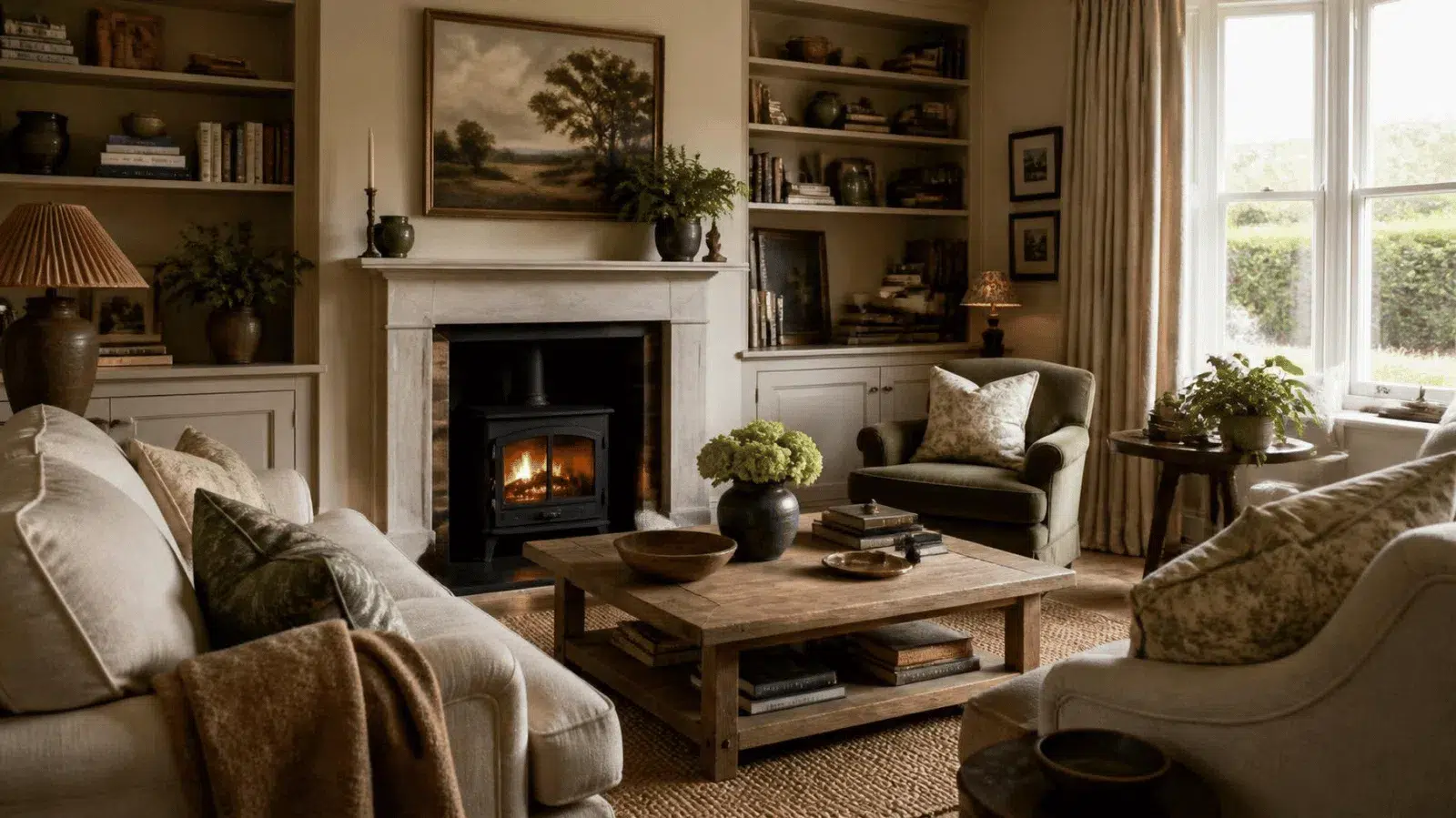
Intentional living at home is about making choices that support ordinary life. It can mean improving a routine, keeping an object you genuinely use, choosing a safer furniture arrangement or deciding not to buy anything new. There is no prescribed style, and there is no need to own fewer belongings simply for appearances.
A useful starting point is to notice where daily life is harder than it needs to be. Instead of trying to create an ideal room all at once, decide what matters to the people who use the space and make one measured change.
This guide concentrates on practical decisions and household priorities. For the topics of pace, awareness, and reducing complexity, see our slow living, mindfulness at home, and simple living idea guides.
What Is Intentional Living at Home?
Intentional living at home means making choices about space, belongings and routines with a clear reason. Rather than automatically copying a decorating trend or adding storage whenever a surface fills up, you look at what a household needs and make changes that support it.
The aim is not a perfect interior or a list of rules about the right number of possessions. It may mean keeping a much-loved dining table, repairing a drawer, simplifying an inconvenient routine or choosing to spend nothing because the current arrangement already works.
Start by asking one practical question: what would make an ordinary day easier for the people who actually live here?
How Intentional Living Differs From Slow and Simple Living
Slow living is often about pace and allowing more deliberate time for activities. Simple living can involve removing unnecessary complexity. Mindfulness focuses on awareness and attention. Intentional living is a decision-making approach that can incorporate those ideas without requiring any one lifestyle.
You can live intentionally in a busy family home, a shared rental or a small flat. The most appropriate choice might be a fast, easy morning setup rather than a slower routine. It can also involve retaining plenty of belongings when they are useful or meaningful.
Explore our existing slow living guide and simple living ideas for those distinct approaches.
Choose Practical Household Priorities
Begin with what people genuinely need from their home, not what an idealised home is supposed to contain. Useful priorities may include accessible storage, comfortable seating, predictable places for keys, easier cleaning or enough free worktop space for preparing meals.
Choose two or three priorities to guide a decision. If a change does not support those priorities, it may be perfectly reasonable to leave it for later. Priorities can change as work, family and accessibility needs change.
Write priorities in concrete terms. ‘Make evenings easier’ is more actionable when translated into ‘keep the reading light beside the chair and give charging leads a safe, dependable location’.
Notice How You Actually Use Your Rooms
Spend a few days observing where activities happen. Does post land on the kitchen counter because the entrance lacks a practical place for it? Is the table often used for both work and meals? Does a favourite chair remain unused because the lamp cannot reach it?
These patterns are information about how the home functions. They are not evidence that anyone is failing to keep the house organised. An effective improvement follows an existing habit rather than demanding a completely different one.
Record a few repeated inconveniences without trying to solve every one on the same day. Often a small change becomes obvious when the pattern is clear.
Find One Source of Daily Friction
Daily friction is a repeated, avoidable difficulty: searching for keys, moving decorative objects before cooking, finding nowhere comfortable to read or rearranging furniture to reach a cupboard. These small problems can be more useful to address than dramatic cosmetic changes.
Pick the issue that most often affects a necessary activity. Check whether it comes from a missing item, poor placement, unsuitable equipment or an expectation that does not match household life.
For example, a cluttered hallway might need a safe place to put shoes near the door, not an entirely new set of matching cabinets.
Try a Simple Home-Use Audit
Walk through the main spaces at the times you use them. Ask whether each area allows the activity it is meant to support, whether frequently used objects are accessible and whether anything creates a safety or maintenance problem.
Distinguish needs from style preferences without dismissing either. A damaged stair light or unstable shelf deserves a different priority from choosing a new cushion colour.
A short audit gives you a basis for deciding what to keep, move, maintain or purchase. Do not buy organisational products until you know which of those actions is actually needed.
Start With Changes You Can Reverse
Changing a chair position, regrouping books or moving a tray often reveals whether an idea works before money is spent. Reversible experiments matter especially in rented homes and shared spaces where permanent alterations are limited.
Give the new setup time to experience real use. A home can look satisfying for an hour but become awkward when children return, meals are prepared, or someone needs equipment stored out of sight.
If the change creates extra work or blocks a useful route, adapt it. A successful arrangement is one that survives everyday life.
Separate Essential Needs, Useful Upgrades and Nice-to-Haves
Not all desired changes belong at the same priority level. A loose or unsafe fitting needs attention. An inadequate desk lamp may be a useful functional improvement. Replacing a serviceable table because another finish is fashionable may be optional.
Consider urgency, safety, frequency of use, cost and likely maintenance before deciding. A decorative purchase can still be worthwhile; it simply should not displace an essential task without a conscious decision.
Keep a short written list so that a passing idea does not become an automatic shopping order.
Give Intentional Choices a Realistic Budget
An intentional home does not have to be expensive, and responsible choices will depend on actual financial circumstances. Set a spending limit before shopping and include delivery, installation, maintenance and any accessories needed to use the item safely.
Look at the consequences of delaying a purchase. An item that merely improves appearance can often wait while a necessary repair is addressed. Avoid assuming that premium materials or expensive organisers are always more useful.
Where a change involves substantial cost, compare practical options and seek suitable professional quotations rather than relying on a single product photograph.
Buy for a Defined Use, Not Just a Style

Before ordering furniture or homeware, describe what it needs to do. A bedside lamp must fit its surface and provide appropriate light; a dining chair needs suitable dimensions and stability; a decorative basket should hold the objects that actually need a home.
Check product dimensions, care instructions, materials, suitability and returns information. The cost of delivery or assembly can affect whether an apparently inexpensive purchase is a sensible one.
Our forthcoming Intentional Shopping for the Home guide will offer a step-by-step buying checklist for new and existing household needs.
Use a Practical Pause Before Nonessential Purchases
A brief decision pause can help distinguish a recurring need from an impulse driven by a promotion or a social media image. It is not a rigid waiting-period rule: urgent replacements and necessary equipment are different.
Ask where the new object will go, what you will use it for, whether something you own already does the job, and what its upkeep requires. If the purchase still makes sense after those questions, buying it can be an intentional choice.
The aim is better alignment between an object’s function and the household, not guilt about enjoying beautiful things.
Repair, Maintain or Reuse Before Automatically Replacing
An existing item may only need cleaning, a compatible replacement part or a straightforward repair by someone competent to do the work. Checking these options can preserve a piece you already know suits the room.
Electrical, gas, structural and safety-critical repairs should be handled appropriately; do not attempt work beyond your competence. Some products are no longer safe or economical to repair, and replacement may be the better decision.
Our second hand furniture guide explains practical checks when choosing pre-owned pieces instead of new ones.
Look Beyond an Item’s Initial Appearance
Consider the real experience of using and maintaining a material. A pale upholstery fabric may be beautiful but unsuitable for how a particular household uses the sofa. A timber finish may require a different care routine from a durable laminate.
Look for credible product specifications, clear maintenance instructions and dimensions that fit the room. Avoid assuming a product is better solely because a description calls it natural, premium or sustainable. Our sustainability page explains how we handle product claims.
For material comparisons, start with natural or sustainable materials for the home.
Plan Rooms Around Activities Rather Than Labels
A dining room may also support homework or occasional work; a spare bedroom might double as a reading area. The correct layout depends on what needs to happen there and how often, rather than the name on the estate-agent floor plan.
Identify the furniture and clearances that each activity requires. Consider storage for items that must be moved between uses, and avoid arrangements that create unsafe lifting or blocked routes.
An adaptable room can be more useful than one dedicated exclusively to a rarely used purpose.
Create Useful Zones Without Overcrowding a Room

An activity zone is simply an arrangement that makes an activity easier. A chair, light and current book create a reading area. A stable work surface, suitable chair and accessible stationery create a small working area.
You do not need screens, large dividers or additional furniture to define every zone. Positioning existing pieces can be enough, especially where access and daylight need to remain open.
Preserve clear movement through the room and avoid obstructing doors, ventilation, heating equipment or natural light.
Keep Storage Easy to Reach and Maintain
Storage is useful when people can find, retrieve and return what they need. Hiding every object behind cabinet doors can reduce visual detail but make ordinary activities slower, while open storage may be preferable for some people.
Place frequent-use items at appropriate heights, give related objects a predictable location and avoid shelves or heavy containers that create an avoidable risk.
Our home organisation ideas guide explores practical storage systems and the difference between a good-looking arrangement and one that actually lasts.
Give Everyday Arrivals a Place to Land
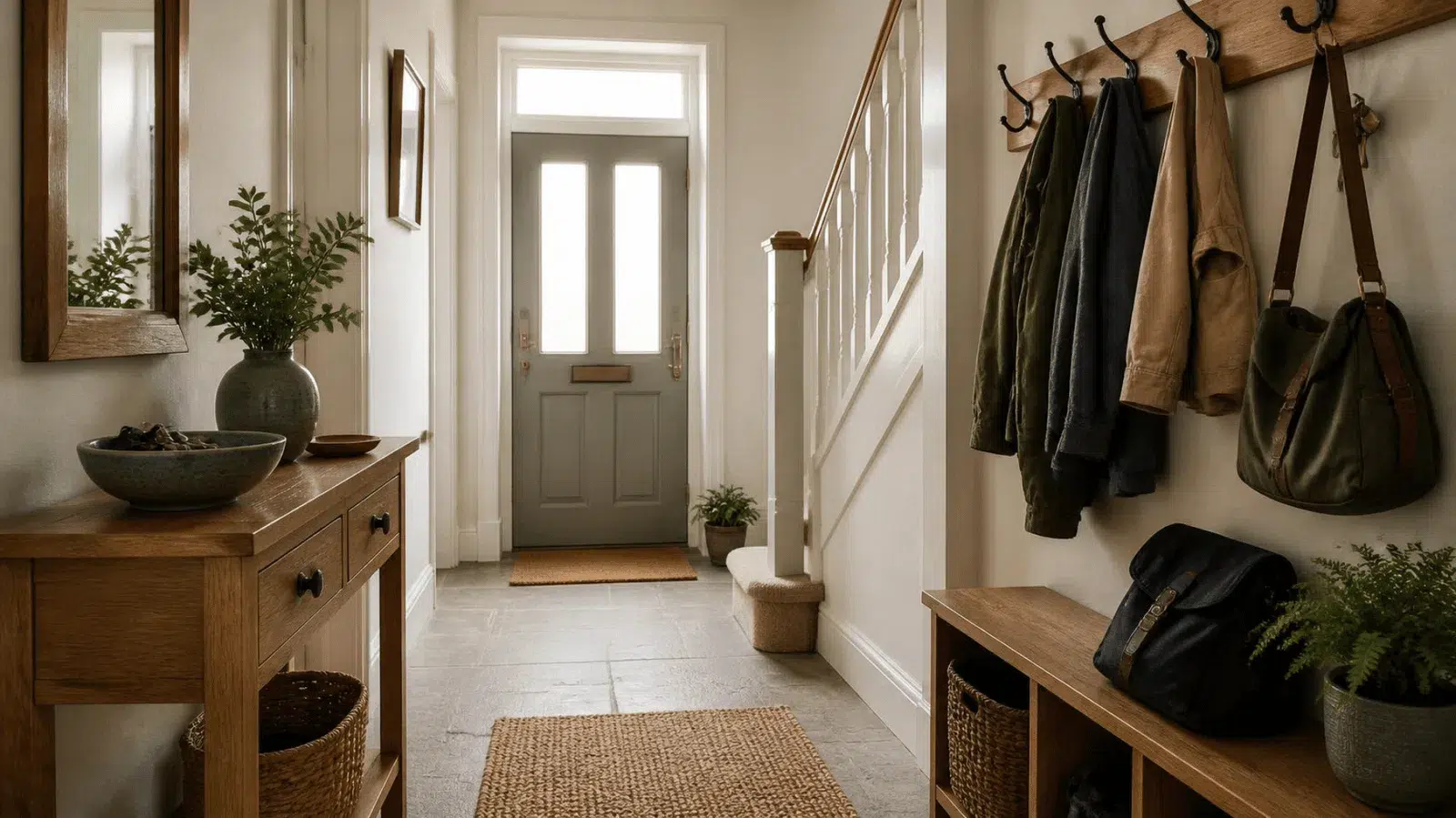
Keys, post, bags and shoes often collect near an entrance. If they repeatedly appear in the same place, the household may benefit from a safe location nearby rather than a new rule to carry everything elsewhere immediately.
A stable bowl, existing drawer or suitable hook may be sufficient. Choose equipment and positioning that maintain clear access and avoid attaching items unsafely to walls or doors.
Keep any shared entrance or emergency route free from obstruction. A tidy-looking landing area is not successful if it narrows the doorway.
Build Routines Around Real Behaviour
A useful home routine should support everyday activities without demanding constant attention. Think about the natural order in which people arrive, cook, work, rest and leave, then see where a small repeatable action would help.
For example, putting items needed for breakfast together can be easier than a new elaborate morning system. A short end-of-day reset may make the table usable tomorrow, without requiring the entire home to look untouched.
An intentional routine is flexible. It should not become a measure of personal worth or another source of pressure.
Adjust Morning and Evening Habits to Your Household
One person may value preparing clothes the evening before; another may need a simple morning checklist. Households with children, shift work, or caring responsibilities have different rhythms, so a single ideal timetable is unlikely to fit everyone.
Focus on what removes a repeated difficulty, such as ensuring keys are ready or giving an evening reading lamp a convenient position.
Our morning routine ideas and evening routine ideas offer more specific examples.
Try a Flexible Weekly Home Reset
A weekly reset can be a short check of the spaces and supplies needed for the coming days: clear a shared surface, return misplaced items, check a frequently used area and identify one small maintenance task.
It does not need to be an exhaustive cleaning session or a list that must be completed regardless of available time. Use household responsibilities and individual energy levels to decide what is realistic.
Our forthcoming Weekly Home Reset guide will provide a practical sequence for shared and busy homes without treating perfection as the goal.
Treat Basic Home Maintenance as Part of Intentional Living
An attractive room still needs functioning equipment, suitable ventilation and safe fittings. Regularly noticing damage, leaks, unstable furniture or difficult-to-use doors may be more important than buying another decorative piece.
Only undertake work within your competence. Follow manufacturer instructions and obtain qualified help for electrical, gas, structural or fire-safety issues, including equipment in rented properties.
Keeping a small list of necessary maintenance can make it easier to prioritise safety and function before optional changes.
Decorate With Personality and Use in Mind
Personal objects, handmade ceramics, books and colour can be part of an intentional home. There is no requirement to reduce every room to neutral surfaces or a strictly minimalist arrangement.
Ask whether a decorative object has a place you enjoy, whether it is safe for the setting and whether it is manageable to care for. The answers can justify keeping something beautiful even if it has no narrowly practical function.
Our natural home decor guide explores textures and materials, while ceramic home decor considers useful decorative pieces.
Change Arrangement Before Removing Belongings
A busy tabletop may need a better grouping of necessities rather than a decluttering exercise. Conversely, buying attractive matching boxes does not help if they make frequently used items harder to reach.
Consider sightlines, work surfaces and the difference between items that are being used and ones without a practical place.
Our visual clutter guide shows how to adjust visible objects while preserving collections and familiar possessions.
Choose Light and Comfort for Everyday Tasks
Lighting should support what people do, whether reading, preparing food, working or moving safely. A striking decorative fitting may not be sufficient if it leaves the primary activity underlit.
Check actual daylight, lamp position, glare and access to switches. Do not darken necessary routes or compromise ventilation to create a particular mood.
For planning layered light, see lighting for a sitting room and calm home ideas.
Make Decisions With the People Who Share the Home
A home may contain people with different working hours, tastes, mobility needs and preferred routines. Reorganising someone else’s belongings without agreement can make the space harder to use even when the result looks simpler.
Discuss which surfaces are shared, which objects need consistent locations and which parts of a room are personal. Compromise may mean accepting some visible equipment or different decorative preferences.
Consider children and care responsibilities, and do not impose an impractical standard of constant tidiness.
Keep Accessibility and Safety Above Aesthetics
Visible labels, open shelves, familiar object positions and clear contrasts may help someone use a home independently. Closed storage and subtle decoration are not automatically the most supportive options.
Preserve safe walking routes, reachable essential items, suitable lighting and access to mobility aids or care equipment. Discuss changes with the person who needs them before moving furniture.
Our sensory-friendly home guide provides related examples of individual preferences and adjustable room arrangements, without medical treatment claims.
Intentional Living in a Rented Home
Renters can often improve functionality with movable furniture, existing storage, and reversible changes. Before drilling, changing permanent fixtures or painting, review tenancy conditions and obtain permission where required.
Report maintenance problems through the appropriate landlord or managing-agent route. Do not alter fire doors, ventilation, electrical installations, or other building-safety features for decorative purposes.
Small improvements can remain valuable even if you cannot redesign the entire property.
Make Intentional Choices in Small Homes
In a smaller room, furniture dimensions and clear access are especially important. A piece that serves more than one genuine function can be useful, but overly complex multifunctional furniture can also be difficult to operate.
Measure practical routes, door swings and the area needed to use each item. Do not purchase storage until you have confirmed that it actually fits and can be reached safely.
Prioritise what the available space must do well rather than trying to accommodate every possible activity.
Decide Which Home Improvements Deserve Priority

When several projects compete for attention, consider immediate safety, essential function, repeated inconvenience, overall cost and whether the change can be reversed. Sometimes fixing a faulty fitting should precede choosing new textiles.
Compare what the project will improve with the disruption, installation work and ongoing maintenance it requires. Keep a separate list for optional decorating ideas so they are not confused with urgent repairs.
Our forthcoming Home Improvement Priorities guide will set out a clear comparison method for households planning a sequence of changes.
Review What Works as Life and Seasons Change
The arrangement that works in summer may need adjustment for darker evenings, school schedules or a new pattern of home working. A single well-chosen lamp position or additional landing place can sometimes meet the change.
Review one recurring inconvenience occasionally, and update the setup when there is a practical need. There is no obligation to refresh a room simply because a new season or trend has arrived.
Keeping useful pieces for longer can be intentional, particularly when they continue to support the household.
A Practical Decision Framework for Home Changes
A simple comparison can prevent a list of ideas from turning into unplanned spending. Start with whether the proposed change addresses safety, access or a repeated daily difficulty.
Then consider what you already own, how many people benefit, what the change costs to install and maintain, and what happens if you wait. The table is a prompt for judgment, not an algorithm that must dictate every choice.
| Proposed change | Question to ask first | Possible next step |
|---|---|---|
| Repair a faulty light | Is there a safety or essential visibility issue? | Prioritise appropriate qualified repair |
| Buy new storage | Where do the objects naturally collect? | Test existing storage before purchasing |
| Replace a usable sofa | What functional problem will change? | Compare comfort, dimensions, care and cost |
| Rearrange a shared room | Who relies on the current layout? | Discuss needs and trial a reversible change |
| Redecorate a rented room | Is consent needed for the work? | Check tenancy conditions and permissions |
| Add a home-office area | Is there adequate space and task lighting? | Measure and assess ergonomics first |
| Start a home routine | Will it suit actual responsibilities? | Pilot a simple flexible weekly process |
An Intentional Living at Home Checklist
Choose one ordinary household activity that could work better. Identify the actual obstacle, ask the people affected and test a modest adjustment using what is already available.
Before committing money or making permanent changes, consider safety, suitability, permission, cost and ongoing care. Observe the change during normal use and keep it only if it makes life more practical or enjoyable.
- Describe one real difficulty or desired improvement.
- Identify the activity and household members affected.
- Separate safety and necessary repairs from optional changes.
- Check whether a change of position or maintenance would help.
- Consider the available budget, time, permissions and effort.
- Keep access, ventilation, lighting and stability safe.
- Measure carefully before buying furniture or organisers.
- Try reversible changes before major commitments where practical.
- Review whether the choice works during an ordinary week.
- Adjust without treating the arrangement as a permanent rule.
Common Mistakes When Trying to Live More Intentionally
One mistake is treating intentional living as a new style to purchase: baskets, matching furniture and a perfectly neutral palette may add cost without solving a problem. Another is removing useful items because a minimalist photograph suggests a room should look empty.
Overcomplicated routines, changing a shared room without consent and ignoring repairs also defeat the purpose. Avoid interpreting a busy week or an untidy afternoon as evidence that the home is not intentional enough.
Frequently Asked Questions About Intentional Living at Home
Intentional living does not require expensive products, minimalism or following a particular morning routine. It means making choices with a reason that suits the people, space and resources involved.
You can begin in a rental or small flat by changing one repeated inconvenience. Buying something new may be the right decision if it fills a real need and suits your budget, while keeping or repairing what already works can be equally deliberate.
What does intentional living at home mean?
It means making deliberate choices about belongings, routines and space based on how a household uses its home, rather than automatically copying trends or buying more.
Is intentional living the same as minimalism?
No. You can keep colourful rooms, useful collections and personal objects. The goal is thoughtful function and meaningful choices, not owning as little as possible.
Can intentional living save money?
It may reduce unnecessary purchases when you check existing options first, but it is not a guarantee of savings. Essential repairs or suitable products can still involve costs.
How do I begin if my home feels overwhelming?
Start with one repeated inconvenience and one practical, reversible change. Do not feel obliged to reorganise an entire house at once.
How can renters live more intentionally?
Use existing storage, movable furniture and simple routines. Obtain appropriate permission before altering permanent fittings.
Does an intentional home need to look calm or neutral?
No. Sensory and aesthetic preferences differ. A considered home can be colourful, full of books and actively used.
Let the Home Reflect Its Real Purpose
Intentional living at home is less about having a particular kind of interior than creating a reliable setting for ordinary activities. Priorities can be practical, personal and different from one household to another.
Choose one change that meets a real need. Test it, keep what helps, and leave the rest until it matters. A lived-in home does not need to be perfect to be thoughtfully arranged.
INTENTIONAL LIVING · PRACTICAL GUIDES
Explore Intentional Living
Thoughtful purchases
Intentional Shopping for the Home: Questions Before Buying
Practical habits
Weekly Home Reset: A Flexible Routine for Busy Households
Purposeful projects
Home Improvement Priorities: What to Change First

Leave a Reply